Salmon Calories: How Many Calories Are in a 4, 6 or 8 oz Fillet?
A clear, tested-against-USDA-data breakdown of salmon calories by weight, type and cooking method, so the numbers on your plate match the numbers on your tracker.
Salmon calories: cooked farmed Atlantic salmon has about 206 calories per 100 g (roughly 58 calories per ounce). A 6 oz cooked fillet has around 350 calories. Wild salmon is leaner, at about 182 calories per 100 g cooked.
How Many Calories Are in Salmon?
People searching “how many calories in salmon” usually want one number. The honest answer is a range, because salmon varies by species, by whether it was farmed or wild, and by how it is cooked.
These figures follow USDA FoodData Central values, the same reference used by most nutrition apps. Salmon sits in the middle of the seafood range: richer than cod or shrimp, but packed with protein and heart-healthy fat.
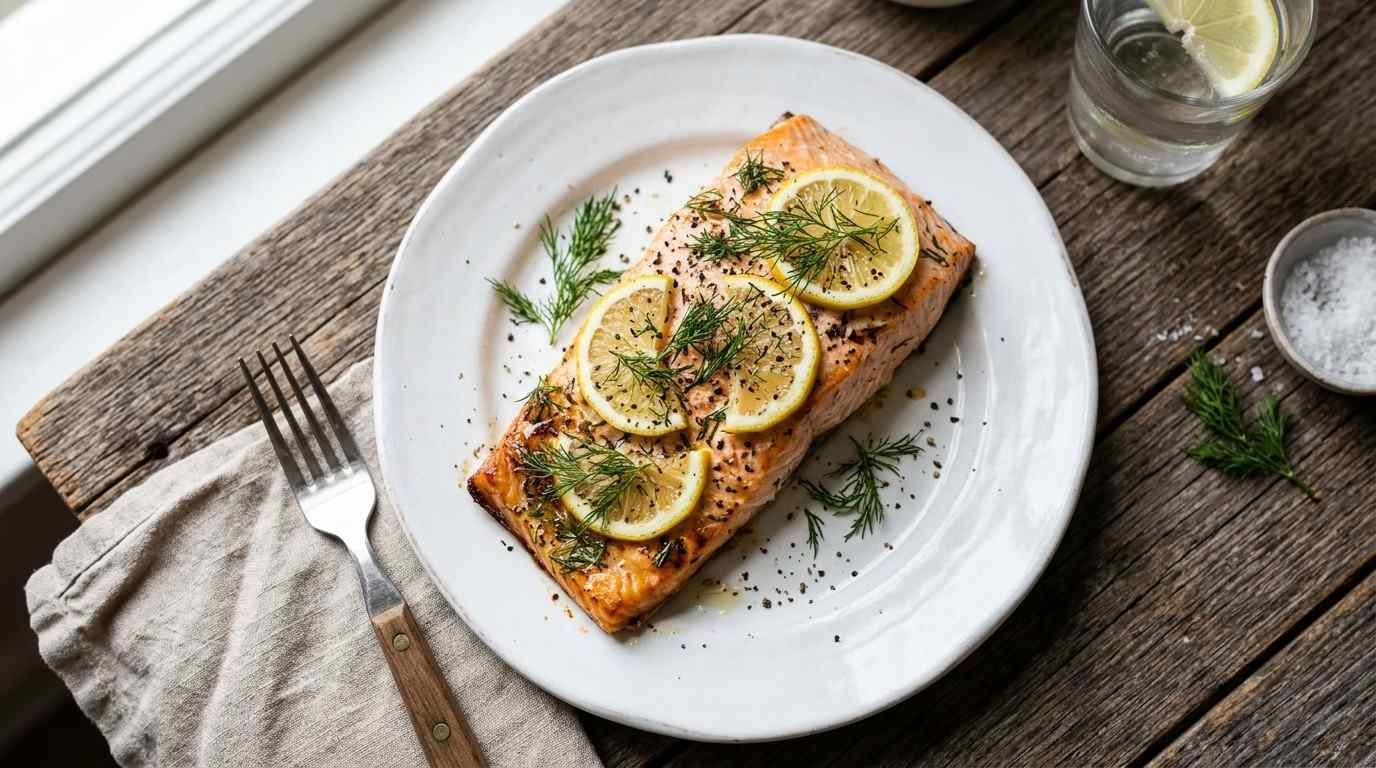
Salmon Fillet Calories by Weight: 4 oz, 6 oz and 8 oz
Portion size changes the total more than anything else. The table below shows calories in a salmon fillet after cooking, with no added oil or butter.
| Cooked portion | Farmed Atlantic | Wild Atlantic | Protein (farmed) |
|---|---|---|---|
| 3 oz (85 g) | ~175 kcal | ~155 kcal | ~19 g |
| 4 oz (113 g) | ~233 kcal | ~206 kcal | ~25 g |
| 5 oz (142 g) | ~292 kcal | ~258 kcal | ~31 g |
| 6 oz (170 g) | ~350 kcal | ~309 kcal | ~38 g |
| 8 oz (227 g) | ~467 kcal | ~413 kcal | ~50 g |
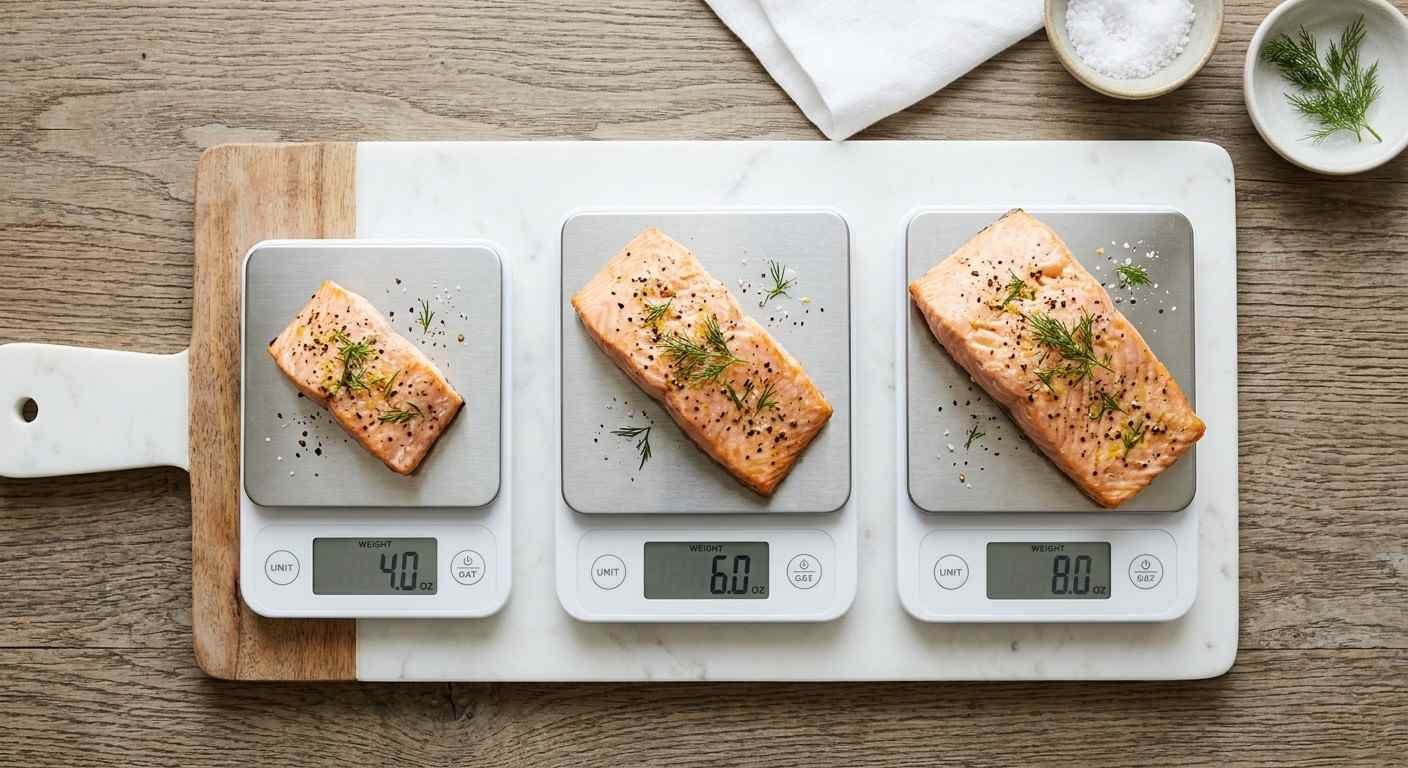
4 oz salmon calories
A 4 oz cooked portion has about 233 calories (farmed) or 206 (wild). This is the most common restaurant-style “lunch” portion and a comfortable fit for most meal plans.
6 oz salmon calories
Six ounces is the typical grocery-store fillet. Expect around 350 calories for farmed and about 310 for wild, with close to 38 g of protein.
8 oz salmon calories
An 8 oz fillet reaches roughly 467 calories (farmed). It is a generous dinner portion and about twice the weekly seafood serving guidance in one sitting.
Salmon Calories per Ounce and per 100 g
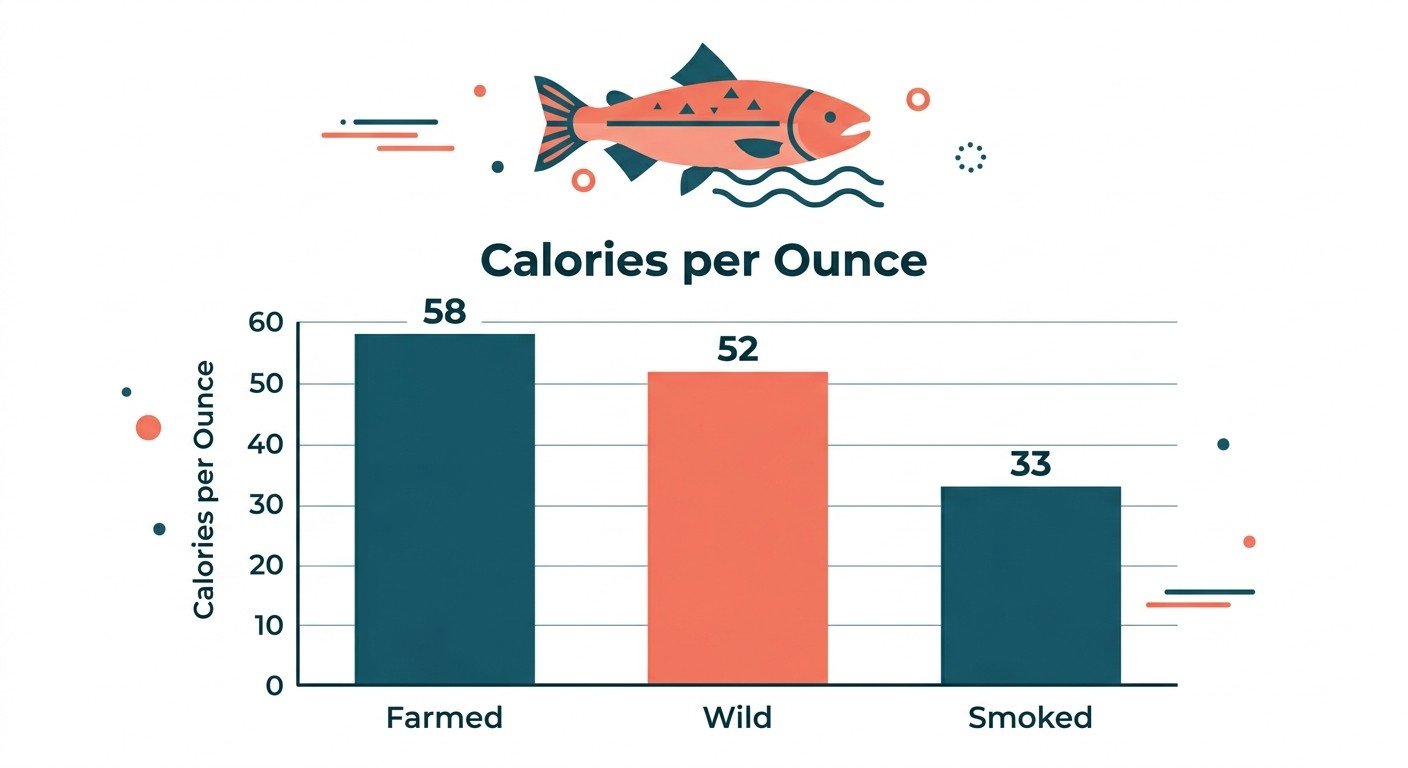
- Cooked farmed Atlantic: about 58 calories per ounce, 206 per 100 g.
- Cooked wild Atlantic: about 52 calories per ounce, 182 per 100 g.
- Raw farmed Atlantic: about 59 calories per ounce, 208 per 100 g.
- Raw wild Atlantic: about 40 calories per ounce, 142 per 100 g.
Calories in Baked, Grilled, Smoked and Raw Salmon
Baked salmon calories
Plain baked salmon matches the cooked values above: about 206 calories per 100 g for farmed fish. Baking itself adds nothing. What changes the total is what goes on the fillet.
| Add-on | Approx. calories |
|---|---|
| 1 tbsp olive oil | +119 |
| 1 tbsp butter | +102 |
| 1 tbsp honey glaze | +64 |
| Lemon, herbs, garlic, pepper | +0 to 5 |
A 6 oz baked fillet with a tablespoon of olive oil lands near 470 calories.
Grilled and pan-seared salmon
Grilling uses little or no added fat, so calories stay close to baked salmon. Pan-searing usually adds 1 to 2 teaspoons of oil, or about 40 to 80 calories.
Smoked salmon calories
Smoked salmon is lower, around 117 calories per 100 g, and a 3 oz serving has about 100. It is also high in sodium, so watch portions if you limit salt.
Raw salmon (sushi and sashimi)
Raw salmon calories are similar to cooked per gram of fillet, but remember the water-weight difference. A typical sashimi piece (about 1 oz) has roughly 40 to 60 calories.
Farmed vs. Wild Salmon and Species Differences
Farmed salmon is fattier because the fish eat a rich diet and move less. Wild salmon is leaner and slightly higher in protein per gram.
| Type (cooked, per 100 g) | Calories | Fat | Protein |
|---|---|---|---|
| Farmed Atlantic | ~206 | ~12 g | ~22 g |
| Wild Atlantic | ~182 | ~8 g | ~25 g |
| Sockeye (wild) | ~200 to 215 | ~9 to 11 g | ~27 g |
| Pink / coho (wild) | ~140 to 180 | ~4 to 8 g | ~22 to 25 g |
Species figures vary by source and season, so treat them as estimates. If you want the lowest calories per bite, choose wild pink or coho. For richer flavor and more omega-3, farmed Atlantic and king (Chinook) are popular.

Serving Size of Salmon
The standard nutrition-label serving is 3 oz cooked (85 g), about the size of a deck of cards. Many cooks serve 4 to 6 oz.
- U.S. Dietary Guidelines suggest about 8 oz of seafood per week, or two 4 oz servings.
- Pregnant or breastfeeding women are generally advised to choose 8 to 12 oz weekly from lower-mercury fish, and salmon qualifies.
- A thumb-width fillet, about 1 inch thick and palm-sized, is close to 4 to 5 oz.
Protein, Fat and Omega-3s in Salmon
Calories are only part of the picture. A 4 oz cooked portion supplies about 25 g of protein, which is why salmon is a favorite for muscle recovery and weight management.
Healthy fats
Most of salmon’s fat is unsaturated. A serving typically provides about 1.5 to 2.5 g of EPA and DHA omega-3 fatty acids per 100 g, which support heart and brain health.
Vitamins and minerals
- Vitamin B12: well above the daily requirement in one serving.
- Vitamin D: a rare food source, especially in wild salmon.
- Selenium, potassium and niacin: abundant in a single fillet.
Carbs and fiber
Plain salmon has zero carbohydrates and zero fiber, making it a fit for low-carb and keto eating.
Practical Tips to Track Salmon Calories Accurately
- Weigh it. A kitchen scale beats eyeballing. Weigh raw or cooked consistently.
- Log the right type. “Atlantic, farmed, cooked” and “sockeye, wild, raw” differ by 60+ calories per 100 g.
- Count the oil. Spray or brush oil lightly, or bake on parchment.
- Skip the skin if needed. Skin adds fat; leave it on while cooking for moisture, then decide.
- Season smart. Lemon, dill, garlic and mustard add flavor for almost no calories.
- Batch cook. Weigh the whole cooked batch, then divide into portions.
Frequently Asked Questions
How many calories are in a 6 oz piece of salmon?
A 6 oz cooked farmed Atlantic fillet has roughly 350 calories. Wild Atlantic has about 310.
Is salmon good for weight loss?
Yes. Its protein and healthy fat keep you full, and a 4 to 6 oz portion fits most calorie targets when cooked without much added fat.
Does cooking change the calories in salmon?
Cooking removes water, so cooked salmon has more calories per ounce than raw. Added oil or butter adds more.
What is a normal serving size of salmon?
A standard serving is 3 to 4 oz cooked (85 to 113 g), and about 8 oz per week is commonly recommended.
Is farmed or wild salmon lower in calories?
Wild salmon, at about 182 calories per 100 g cooked versus about 206 for farmed Atlantic.
Conclusion
Salmon calories depend on portion, type and cooking method, but the core numbers are simple: about 58 calories per ounce cooked for farmed Atlantic, roughly 233 calories in 4 oz, 350 in 6 oz and 467 in 8 oz. Wild salmon trims about 10 percent. Weigh your fillet, log the right variety and count any oil, and salmon becomes one of the easiest high-protein, omega-3-rich foods to fit into any plan.
Explore more food guides at Halal Food Near Me.