Rice Calories: The Complete Guide for 1 Cup, 100g, a Bowl and More
Exact numbers for white, brown, jasmine and basmati rice, cooked and uncooked, plus simple ways to portion it without guessing.
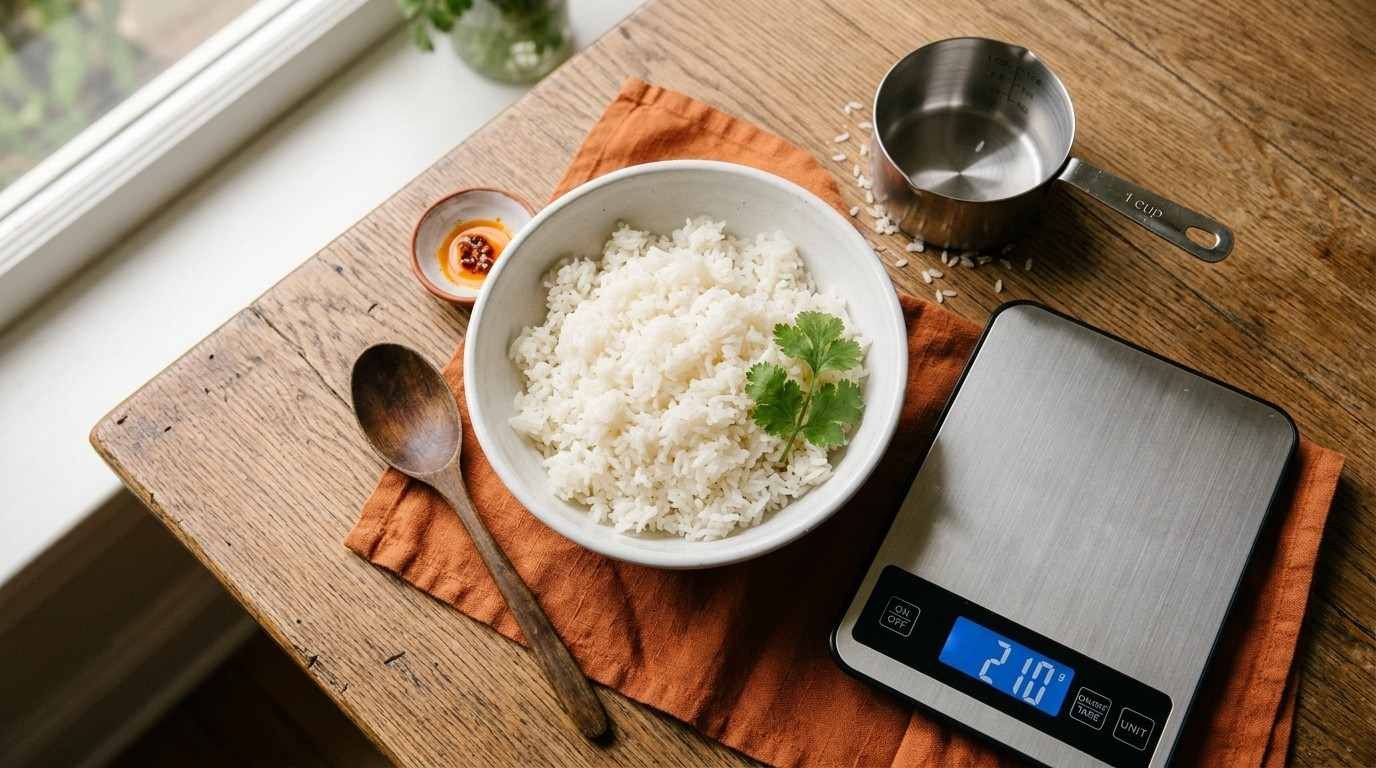
Rice feeds more than half the world, yet it is one of the most mis-measured foods in the kitchen. A scoop looks the same whether it is dry or cooked, and that confusion is why two people can quote numbers that differ by 300 calories. This guide clears it up with clear tables and real-life examples.
How Many Calories Are in a Cup of Rice?
For cooked long-grain white rice, one level cup (about 158g) provides roughly 205 calories. That is the number most people mean when they ask about 1 cup rice calories. Brown rice is slightly higher per cup because a cup of it weighs more, at around 215 calories.

Calories in a cup of cooked rice (macros)
| Nutrient (1 cup cooked white, 158g) | Amount |
|---|---|
| Calories | ~205 kcal |
| Carbohydrates | ~45 g |
| Protein | ~4.3 g |
| Fat | ~0.4 g |
| Fiber | ~0.6 g |
Why the number varies
A “cup” is a volume, not a weight. Loosely packed rice, sticky short-grain rice and rice cooked with butter or oil can shift the total by 10–30%. Pressing the rice into the cup is the most common cause of underestimating.
1/2 Cup, 100g and Bowl of Rice Calories
Portion size changes everything. This table converts the most searched amounts of cooked long-grain white rice:
| Portion | Weight | Calories | Carbs |
|---|---|---|---|
| 1/2 cup | 79g | ~103 | ~22g |
| 100g | 100g | ~130 | ~28g |
| 1 cup | 158g | ~205 | ~45g |
| 1.5 cups (small bowl) | 237g | ~308 | ~67g |
| 2 cups (restaurant side) | 316g | ~410 | ~89g |
| 3 cups (large takeout bowl) | 474g | ~615 | ~134g |
How many calories are in a bowl of rice?
A typical home bowl holds 1.5 to 2 cups, so a bowl of rice has about 300–410 calories. Restaurant bowls often hold 2.5–3 cups, which pushes a plain bowl past 500 calories before any sauce or protein is added.
Rice calories per 100g
Weighing is the most accurate method. 100g of cooked white rice has about 130 calories, while 100g of cooked brown rice has about 112. The difference comes from brown rice holding slightly more water after cooking.
1 Cup of Uncooked Rice Calories
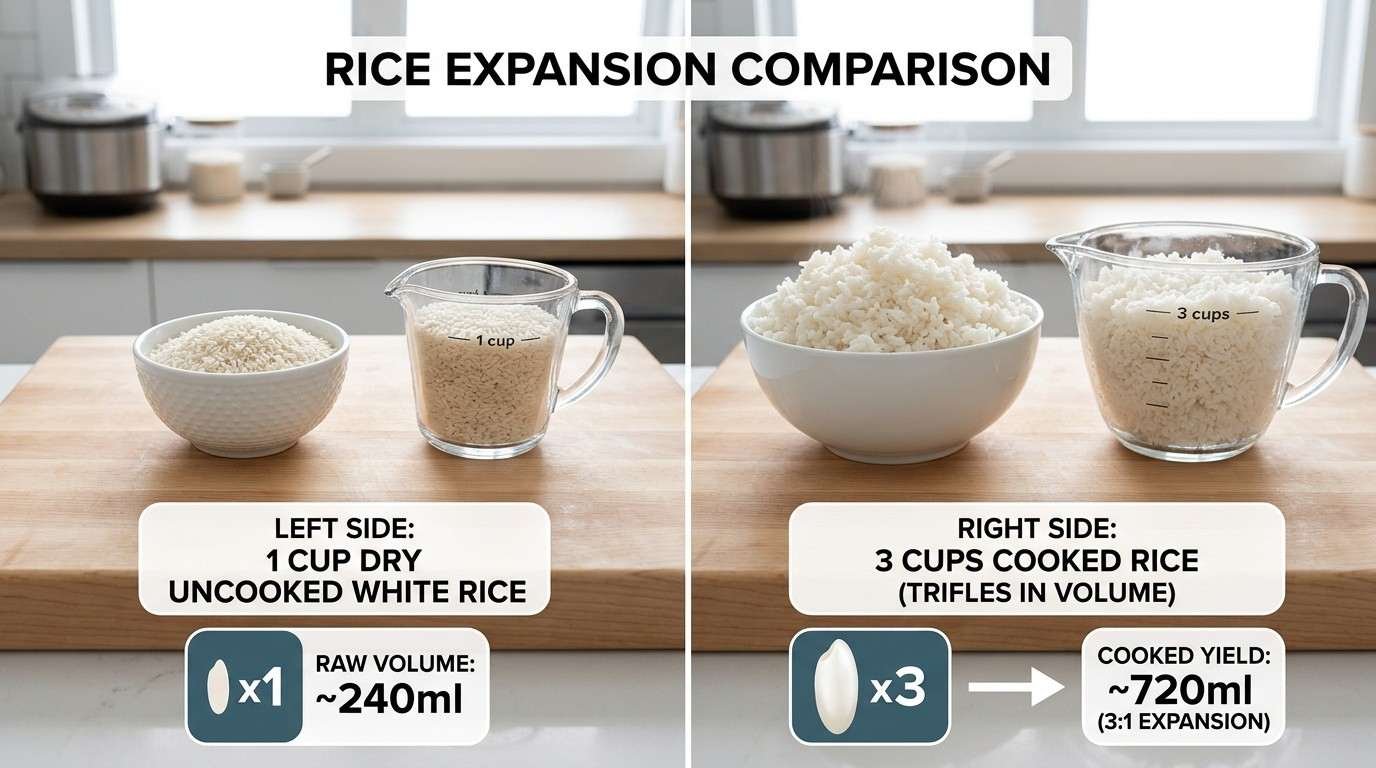
Dry rice is dense. One cup of uncooked long-grain white rice (about 185g) contains roughly 675 calories and 148g of carbs, and 100g of raw rice has about 365 calories.
These numbers do not contradict the cooked figures. Rice absorbs water and roughly triples in volume, so 1 cup dry becomes about 3 cups cooked. The calories stay the same; they are just spread across more rice.
| Uncooked white rice | Calories | Cooked yield |
|---|---|---|
| 1/4 cup (46g) | ~170 | ~3/4 cup |
| 1/2 cup (93g) | ~340 | ~1.5 cups |
| 1 cup (185g) | ~675 | ~3 cups |
Rice Calories by Type
| Type (1 cup cooked) | Calories | Notes |
|---|---|---|
| White long-grain | ~205 | Baseline for most searches |
| Brown | ~216 | More fiber (about 3.5g) and magnesium |
| Jasmine | ~205 | Similar to white; slightly stickier |
| Basmati | ~190–210 | Often lower glycemic index |
| Fried rice | ~240–330 | Oil, egg and sauce add calories |
| Mexican rice | ~210–250 | Cooked with oil and tomato |
| Cauliflower rice | ~25 | Vegetable substitute, very low carb |
Is brown rice lower in calories than white rice?
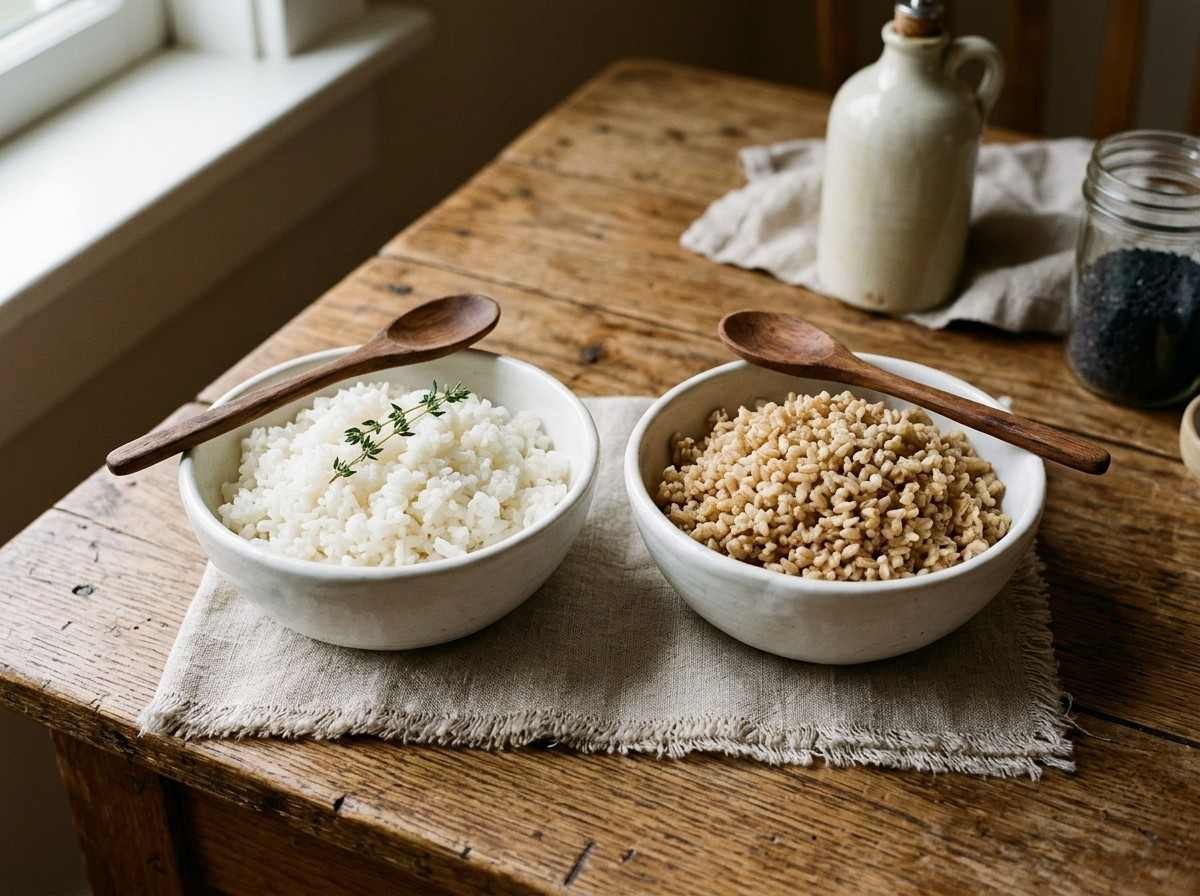
No, they are almost equal. Brown rice keeps its bran and germ, so it offers more fiber and micronutrients, which can help you feel full longer. If weight loss is the goal, portion size matters far more than the color of the grain.
Jasmine and basmati rice calories
Jasmine rice lands almost exactly on white rice at about 205 calories per cooked cup. Basmati can run a little lower and tends to have a lower glycemic index, which some people prefer for steadier energy.
How Many Carbs Are in a Cup of Rice?
One cup of cooked white rice has about 45g of carbohydrates, and the same amount of cooked brown rice has about 45g as well. Because 90% or more of rice calories come from carbs, rice carbs per cup are easy to remember: roughly 45g for each cooked cup, or about 22g per half cup.
- Low-carb days: stick to 1/2 cup or swap part of the rice for cauliflower rice.
- Active days: 1 to 1.5 cups after a workout refuels glycogen efficiently.
- Blood sugar: pair rice with protein, vegetables and healthy fat to slow digestion.
How to Read a Rice Nutrition Label
The rice nutrition label on a bag usually lists values for the dry amount, often 1/4 cup (about 45g), which provides around 160–170 calories. Many people assume the label describes cooked rice and log the wrong number.
Three checks before you trust the number
- Look at the serving size and whether it says “dry” or “uncooked”.
- Note servings per container to scale the total correctly.
- Check for added oil, salt or seasoning in microwave pouches, which raise calories.
Practical Tips for Eating Rice Smartly
- Measure once, eyeball later. Weigh or measure rice for a week to calibrate your visual sense.
- Cook, chill, reheat. Cooled rice forms resistant starch, which digests more slowly. Refrigerate within an hour and reheat thoroughly for food safety.
- Fill half the plate with vegetables. This keeps the meal volume high with fewer calories.
- Mind the extras. One tablespoon of oil or butter adds 100–120 calories to a pot of rice.
- Rinse your rice. It removes surface starch and, for some varieties, reduces trace inorganic arsenic.

Rice around the world
Rice appears in cuisines of every kind, from halal biryani to vegetarian pilaf. If you are curious about how food rules shape ingredients, read our explainers on whether vegetarian food is halal and whether kosher food is healthier. You can also learn what kosher food is, and see how it overlaps with halal in is kosher food halal, is halal food kosher and is all kosher food halal. Plain rice is naturally compatible with both, so the key question is usually the sauce, broth or fat it is cooked in. Browse more on the Halal Food Near Me homepage.
Rice Calories FAQ
How many calories are in a cup of cooked white rice?
About 205 calories and 45g of carbs for one cup (158g) of cooked long-grain white rice.
How many calories are in 100g of rice?
100g of cooked white rice has about 130 calories. 100g of uncooked rice has about 365.
Is brown rice lower in calories than white rice?
Only slightly per 100g (about 112 vs 130), but a cup of brown rice weighs more, so calories per cup are similar. Brown rice offers more fiber.
Should I weigh rice cooked or uncooked?
Either works if your tracking entry matches. Use dry values for uncooked weight and cooked values for cooked weight, and never mix the two.
Can I eat rice and still lose weight?
Yes. Weight loss comes from a calorie deficit overall, so portion-controlled rice with vegetables and protein fits well.
Conclusion
Rice calories are simple once the measuring method is clear. Remember the anchors: 1 cup cooked is about 205 calories, 1/2 cup is about 103, 100g is about 130, and 1 cup uncooked is about 675. A typical bowl lands between 300 and 410 calories, and carbs run about 45g per cooked cup.
Weigh when accuracy matters, match your tracker entry to cooked or dry, and watch the oil and sauces. Rice can be a satisfying part of almost any eating plan. Explore more food guides on Halal Food Near Me.