Home / Cuisines / Indian food
Indian Food: A Friendly Guide to Dishes, Regions, and How to Order
From buttery curries to crisp dosas, Indian food is one of the most varied cuisines on earth. Here is how it works, what to try first, and how to find a great meal near you.
Indian food is the collection of regional cuisines from across the Indian subcontinent. It is known for layered spice blends, slow-cooked gravies, lentils, rice, flatbreads, and a large range of vegetarian dishes. There is no single “Indian cuisine”: a meal in Punjab, Kerala, and Bengal can taste completely different.
People are hungry for this topic. According to Ahrefs keyword data, “indian food near me” and “indian food” each draw more than 100,000 searches a month, and the database lists nearly 40,000 related keyword ideas, from “is indian food healthy” to “south indian food.” Most searchers want the same few things: what to eat, whether it suits their diet, and where to get it.
This guide answers all three, in plain language.
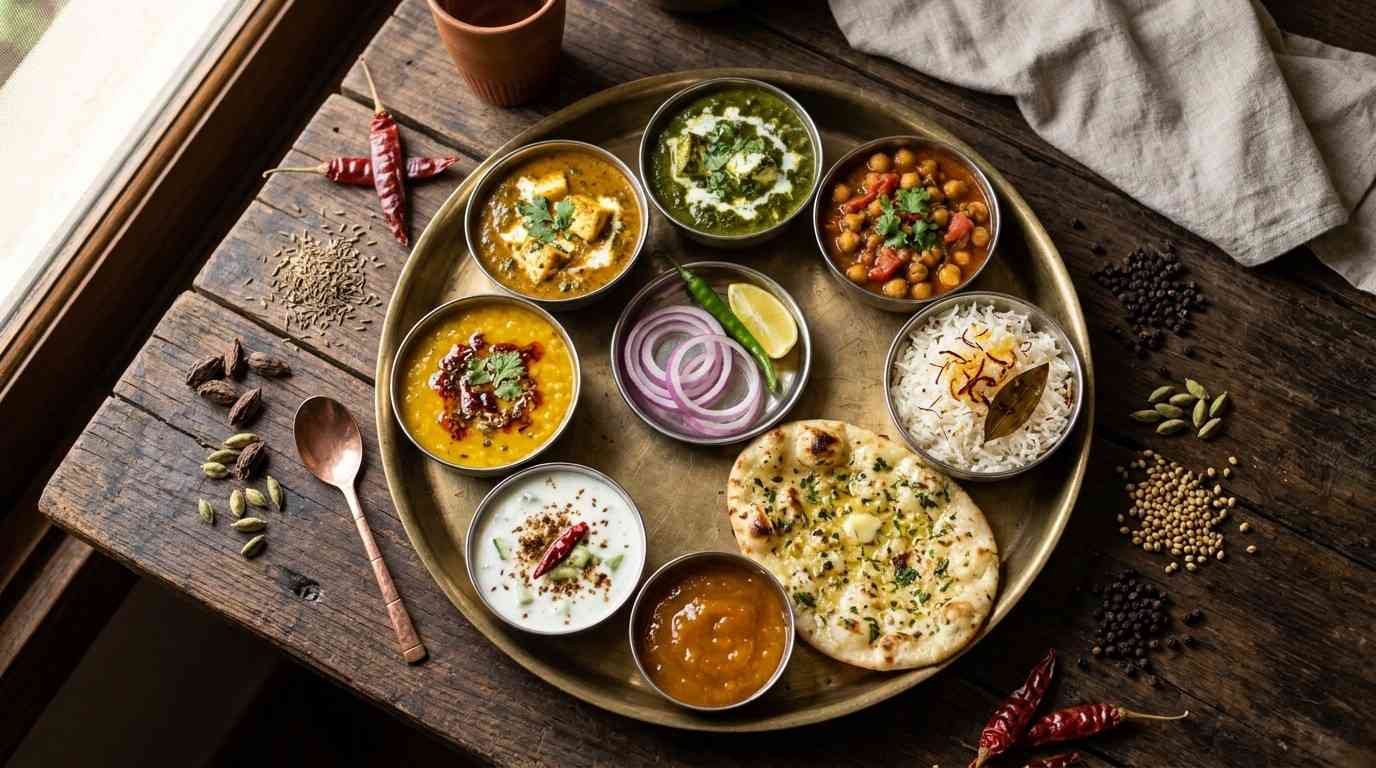
What Makes Indian Food Unique
Three things set Indian cooking apart: the spices, the techniques, and the sheer regional variety.
The core spices
Most kitchens rely on a small toolkit, combined in different ratios:
- Turmeric: earthy and golden, the color behind many dals and curries.
- Cumin and coriander: the warm, nutty backbone of countless gravies.
- Red chili: brings heat, but also color and fruitiness in milder varieties such as Kashmiri chili.
- Cardamom, cloves, and cinnamon: sweet-aromatic spices used in biryani, chai, and desserts.
- Garam masala: a finishing blend that adds fragrance at the end of cooking.
Key cooking techniques
- Tadka (tempering): spices sizzled in hot oil or ghee, then poured over a dish for a burst of flavor.
- Tandoor cooking: a very hot clay oven that gives naan its blisters and tikka its smoky char.
- Dum: sealing a pot and cooking low and slow so aromas stay inside, as in dum biryani.
- Bhuna: frying a masala base until the oil separates, which builds deep flavor.
“Curry” is a broad English word. In India, dishes are usually named for the main ingredient or method, such as rajma (kidney beans) or saag paneer (spinach and cheese).
Regional Indian Food
Geography shapes the plate. Climate, farming, and history decide whether a region leans on wheat or rice, coconut or cream, mustard oil or ghee.
| Region | Signature flavors | Dishes to try |
|---|---|---|
| North (Punjab, Delhi, Kashmir) | Rich gravies, dairy, tandoor, wheat breads | Butter chicken, naan, chole bhature, rogan josh |
| South (Tamil Nadu, Kerala, Karnataka, Andhra) | Rice, lentils, coconut, curry leaves, tamarind | Dosa, idli, sambar, Kerala fish curry |
| East (Bengal, Odisha) | Mustard oil, fish, subtle spice, sweets | Machher jhol, shorshe ilish, rasgulla |
| West (Gujarat, Maharashtra, Goa, Rajasthan) | Sweet-sour balance, snacks, seafood, vindaloo heat | Dhokla, pav bhaji, Goan vindaloo, dal baati |
North Indian food
This is the style most Western restaurants serve. Expect creamy tomato gravies, kebabs from the tandoor, and breads like naan, roti, and paratha. It is usually the most beginner-friendly place to start.
South Indian food
Lighter and tangier, with fermented rice-and-lentil batters for dosa and idli. Many dishes are naturally vegan and gluten-free. It is also a great pick for breakfast, which is why “south indian food near me” is such a common search.
East and West Indian food
Eastern cooking is mustard-forward and fish-loving, with a famous sweet tradition. Western India ranges from sweet Gujarati vegetarian thalis to fiery Goan seafood curries.
Image suggestion: crisp masala dosa with sambar and coconut chutney. Alt text: “South Indian masala dosa served with sambar and chutney.”
Most Popular Indian Dishes
New to the cuisine? This shortlist covers what most diners enjoy first.
Starters and snacks
- Samosa: fried pastry filled with spiced potato and peas.
- Pakora: vegetables dipped in chickpea batter and fried.
- Chaat: a tangy, crunchy street-food mix of chickpeas, yogurt, and chutneys.
- Chicken tikka: marinated chicken grilled in the tandoor.
Main dishes
- Butter chicken (murgh makhani): mild, creamy, and tomato-based.
- Chicken tikka masala: grilled chicken in a spiced tomato-cream sauce.
- Palak paneer: cheese cubes in a smooth spinach gravy.
- Chana masala: chickpeas simmered in a tangy tomato-onion base.
- Dal makhani: black lentils cooked overnight with butter and cream.
- Lamb rogan josh: a Kashmiri braise with deep red color and gentle heat.
Breads and rice
- Naan: soft, leavened bread from the tandoor, often brushed with garlic butter.
- Roti and paratha: whole-wheat flatbreads, plain or stuffed.
- Biryani: layered, saffron-scented rice with meat or vegetables.
- Jeera rice: basmati tossed with cumin.
Desserts and drinks
- Gulab jamun: milk dumplings in cardamom syrup.
- Kheer: creamy rice pudding.
- Mango lassi: a cooling yogurt drink, ideal with spicy food.
- Masala chai: spiced milk tea.
Is Indian Food Healthy?
Yes, it can be. Indian cuisine has many fiber-rich, plant-based dishes built on lentils, chickpeas, and vegetables. The healthiest choices depend on how a dish is cooked, not on the cuisine itself.
Lighter choices
- Tandoori or tikka items (grilled, not fried)
- Dal, chana masala, and vegetable curries
- Idli, uttapam, and plain dosa
- Roti instead of butter naan
- Raita (yogurt with cucumber) as a side
Treat-yourself choices
- Cream- and butter-heavy gravies such as korma and makhani sauces
- Deep-fried starters like samosas and pakoras
- Syrup-soaked desserts
Build a balanced plate: one lentil or vegetable dish, one grilled protein, a small portion of rice or one roti, and a side of salad or raita. Ask for “less oil” or “light cream” and most kitchens will oblige.
Anyone with a medical condition, such as diabetes or high blood pressure, should check portion and sodium choices with a doctor or dietitian.
Vegetarian, Vegan, Halal, and Kosher Indian Food
Indian cuisine is friendlier to special diets than most. That is one reason it is a go-to for mixed groups.
Vegetarian and vegan
Vegetarian cooking is central to Indian food culture, so menus often list vegetarian dishes separately. Many are vegan too, but watch for ghee, paneer, cream, and yogurt. Ask whether a dish uses dairy. If you also follow halal rules, this guide on whether vegetarian food is halal explains the details. Our halal food directory can also help you find suitable restaurants.
Halal Indian food
Indian cuisine has a long Muslim culinary tradition, visible in biryani, kebabs, korma, and nihari. Still, a meat dish is halal only if the meat is sourced and slaughtered accordingly. Never assume. Ask the staff, or look for a halal certificate or sign.
Kosher and Indian food
Few Indian restaurants are kosher-certified, but vegetarian Indian dishes are a popular option for kosher-keeping diners, provided the kitchen and ingredients are certified. Curious how the two systems compare? These guides break it down:
- What is kosher food?
- Is kosher food halal?
- Is halal food kosher?
- Is all kosher food halal?
- Is kosher food healthier?
How to Find the Best Indian Food Near You
Searches like “best indian food near me” and “indian food buffet near me” show that diners want quality, not just proximity. Use this checklist.
Five signs of a good Indian restaurant
- A focused menu. Fifteen well-made dishes beat 150 average ones.
- A tandoor. Real naan and tikka need one.
- Fresh-tasting gravies. Bright color, balanced spice, no greasy film.
- Regional dishes. Dosa, Goan fish curry, or Hyderabadi biryani signal real depth.
- Recent, detailed reviews. Look for comments naming specific dishes, and compare Yelp, TripAdvisor, and Google.
Compare the formats
| Format | Best for | Watch out for |
|---|---|---|
| Sit-down restaurant | Dates, families, full menus | Weekend waits |
| Lunch buffet | Sampling many dishes cheaply | Dishes sitting too long |
| Food truck | Quick, street-style meals | Limited menu and seating |
| Delivery | Weeknights at home | Naan and fried items lose crispness |
Call ahead or ask in person about halal meat, nuts, dairy, and shared fryers. Menus rarely show everything.
How to Order Like a Regular
Build a shareable meal
Indian food is made for sharing. For two people, a reliable formula is:
- 1 starter (samosa or tikka)
- 2 mains, one creamy and one lighter (butter chicken plus chana masala)
- 1 rice or biryani
- 2 breads
- 1 raita or lassi to cool things down
Choose your spice level
Restaurants often offer mild, medium, and hot. “Medium” at a local spot may feel hot to some people, so start mild, and ask for chili or pickle on the side.
Reach for yogurt, raita, rice, or a mango lassi. Dairy calms capsaicin better than water does.
Eat it the traditional way
Tear naan with your right hand and scoop up the curry. Pour gravy over rice, mix, and enjoy. Forks are always welcome too.
Image suggestion: hands tearing garlic naan beside a bowl of butter chicken. Alt text: “Tearing naan to scoop butter chicken at an Indian restaurant.”
Cooking Indian Food at Home
You do not need fifty jars. A starter pantry of ten items covers most recipes.
- Whole cumin seeds and ground cumin
- Ground coriander and turmeric
- Kashmiri chili powder and garam masala
- Ginger, garlic, and onions
- Canned tomatoes, plain yogurt, and ghee or oil
- Dried or canned lentils and chickpeas
Three beginner-friendly dishes
- Dal tadka: boiled yellow lentils topped with sizzling cumin, garlic, and chili.
- Chana masala: canned chickpeas in a tomato-onion masala, ready in about 30 minutes.
- Jeera rice: basmati toasted with cumin seeds, an easy side for any curry.
Cook the onions until deeply golden and bloom ground spices in oil for 30 seconds. These two steps give restaurant-level flavor.
Indian Food FAQ
What is Indian food made of?
It is built on vegetables, legumes, rice, wheat breads, dairy, and meat or seafood, flavored with spices such as cumin, coriander, turmeric, and chili, plus ginger, garlic, and onion.
Is Indian food always spicy?
No. Heat varies widely. Butter chicken, korma, and biryani are rich and aromatic rather than fiery, and most restaurants can adjust spice on request.
Is Indian food healthy?
It can be. Lentil, chickpea, vegetable, and tandoori dishes are nutritious. Cream-heavy gravies and fried snacks are better as occasional treats.
What is the most popular Indian food?
Chicken tikka masala, butter chicken, biryani, samosas, naan, and dosa are among the most widely ordered dishes.
Is Indian food halal?
Not automatically. Vegetarian dishes avoid meat concerns, but meat dishes are halal only when the restaurant uses halal meat. Always ask before ordering.
Conclusion: Where to Start With Indian Food
Indian food rewards curiosity. Its spices, regional range, and plant-forward dishes make it a cuisine for almost every taste and diet. Begin with approachable favorites such as butter chicken, palak paneer, and naan. Then branch out to dosa, biryani, and regional specialties.
- Learn the spices and techniques to understand what you taste.
- Explore the four regions rather than one “curry” style.
- Choose grilled and lentil-based dishes for lighter meals.
- Check halal, vegetarian, or kosher needs before you order.
- Judge restaurants by focus, freshness, and recent detailed reviews.
Ready to eat? Browse more guides on the Halal Food Near Me homepage and find a table that fits your diet.
SEO Details
Title, meta, and URL
- SEO title (52 characters): Indian Food: Dishes, Regions & How to Order (2026 Guide)
- Meta description (about 155 characters): Explore Indian food: popular dishes, regional cuisines, spices, healthy picks, and tips for finding the best Indian restaurant near you. Start here.
- URL:
https://halalfoodnearme.online/indian-food/
Competitor and intent analysis
- Intent: mixed. Informational (what is it, is it healthy) plus local-commercial (near me, buffet, delivery). The listed competitors are mostly local listings (Yelp, TripAdvisor, restaurant sites) plus Wikipedia’s encyclopedic page.
- Gaps this article fills: a beginner ordering guide, health guidance, diet compatibility (halal, kosher, vegetarian), and a restaurant-quality checklist.
- Keyword themes covered: indian food near me, best indian food, south indian food, north indian food, traditional indian food, vegan indian food, is indian food healthy, indian food recipes, indian food buffet, popular indian food, indian food names.
Internal and external link suggestions
- Internal (already placed): the home page, vegetarian-halal, and all five kosher guides.
- External authority links to add: Wikipedia’s “Indian cuisine” entry, a nutrition source such as the Harvard T.H. Chan School of Public Health or USDA FoodData Central, and a recognized halal certification body for sourcing details. Verify each URL before publishing.
Image suggestions
- Hero: a colorful thali (alt text: “Indian food thali with dal, paneer curry, rice, and naan”)
- Spice flat-lay: turmeric, cumin, cardamom, chili
- Regional map of India with signature dishes
- Masala dosa, biryani, and butter chicken close-ups
- Use original or licensed photos, compressed to WebP, with lazy loading.