Nutrition Guide · Updated November 2026
How Much Protein in Salmon? Full Chart by Ounce, Gram & Cut
Exact protein numbers for 3, 4, 6 and 8 oz fillets, plus carbs, calories, wild vs. farmed differences and easy ways to get more from every serving.
Quick answer: A 4 oz (113 g) cooked salmon fillet has about 25 grams of protein. Cooked salmon averages 22 to 25 grams of protein per 100 g, depending on the species and whether it is wild or farmed. Salmon has zero carbs.
Why Salmon Is a Protein Favorite
Salmon sits at the intersection of two things most people want from dinner: high-quality protein and heart-friendly fats. A single fillet can cover roughly half of an average adult’s daily protein target, while delivering omega-3 fatty acids, vitamin D and B vitamins.
Still, the exact number depends on the portion, the species and the cooking state. Raw salmon weighs more water than cooked salmon, so a raw 4 oz piece has less protein than a cooked 4 oz piece. This guide sorts out those differences with clear numbers.

How Much Protein Is in Salmon? (Chart by Ounce and Gram)
The table below uses USDA values for cooked Atlantic salmon. Farmed salmon provides about 22 g of protein per 100 g, while wild salmon provides about 25 g per 100 g.
| Cooked portion | Grams | Farmed protein | Wild protein |
|---|---|---|---|
| 3 oz (palm-sized) | 85 g | ≈ 19 g | ≈ 22 g |
| 4 oz fillet | 113 g | ≈ 25 g | ≈ 29 g |
| 6 oz fillet | 170 g | ≈ 37 g | ≈ 43 g |
| 8 oz fillet | 227 g | ≈ 50 g | ≈ 58 g |
| Per 100 g | 100 g | ≈ 22 g | ≈ 25 g |
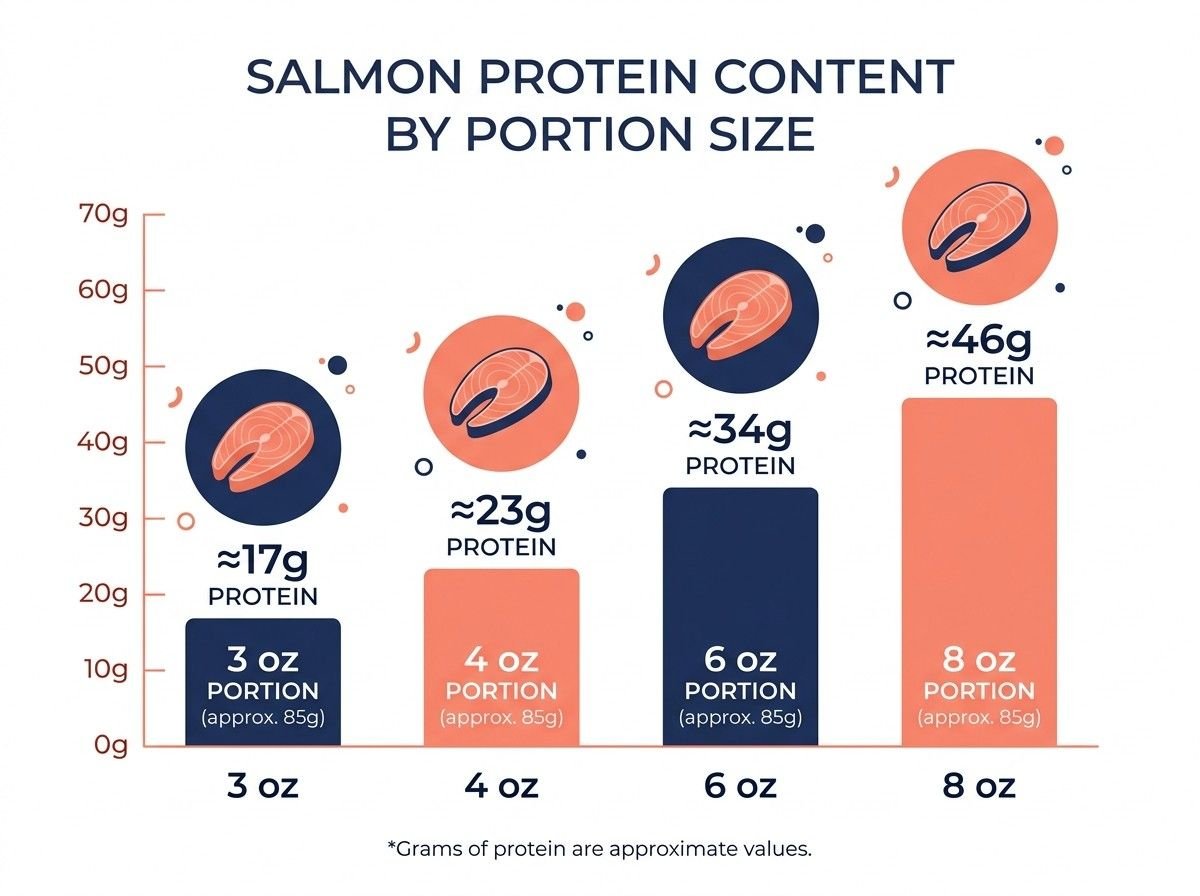
Protein in a Salmon Fillet
Most grocery-store fillets weigh 5 to 7 oz raw. After cooking, a typical fillet loses about 20 to 25 percent of its weight in water, so a 6 oz raw fillet becomes roughly 4.5 oz cooked and offers about 28 g of protein.
Protein in 4 oz, 6 oz and 8 oz of Salmon
- 4 oz salmon protein: about 25 g, a solid lunch portion.
- 6 oz salmon protein: about 37 g, common for restaurant and meal-prep servings.
- 8 oz salmon protein: about 50 g, popular among athletes and heavy lifters.
Salmon Protein per 100g
Dietitians and nutrition labels often use 100 g as the standard unit. Cooked farmed Atlantic salmon contains about 22 g of protein per 100 g, and cooked wild Atlantic salmon about 25 g. How many grams of protein in salmon is the answer for a whole meal? Multiply the cooked weight in grams by 0.22 (farmed) or 0.25 (wild).
Salmon Nutrition Facts (Per 100 g Cooked)
These figures describe cooked farmed Atlantic salmon. Wild Atlantic salmon is leaner, at roughly 182 calories and 8 g of fat per 100 g, with slightly more protein.
Key Nutrients Beyond Protein
- Omega-3 fatty acids (EPA and DHA): linked to heart and brain health.
- Vitamin D: supports bones and immune function; salmon is among the best natural food sources.
- Vitamin B12 and niacin: support energy metabolism and nerve health.
- Selenium and potassium: support thyroid function and healthy blood pressure.
- Astaxanthin: the antioxidant pigment that gives salmon its pink color.
Does Salmon Have Carbs? How Many Carbs in Salmon?
Plain salmon contains 0 grams of carbohydrate, no sugar and no fiber. That makes it a natural fit for keto, low-carb, paleo and diabetic-friendly meal plans.
Salmon Protein by Type: Wild, Farmed, Canned and Smoked
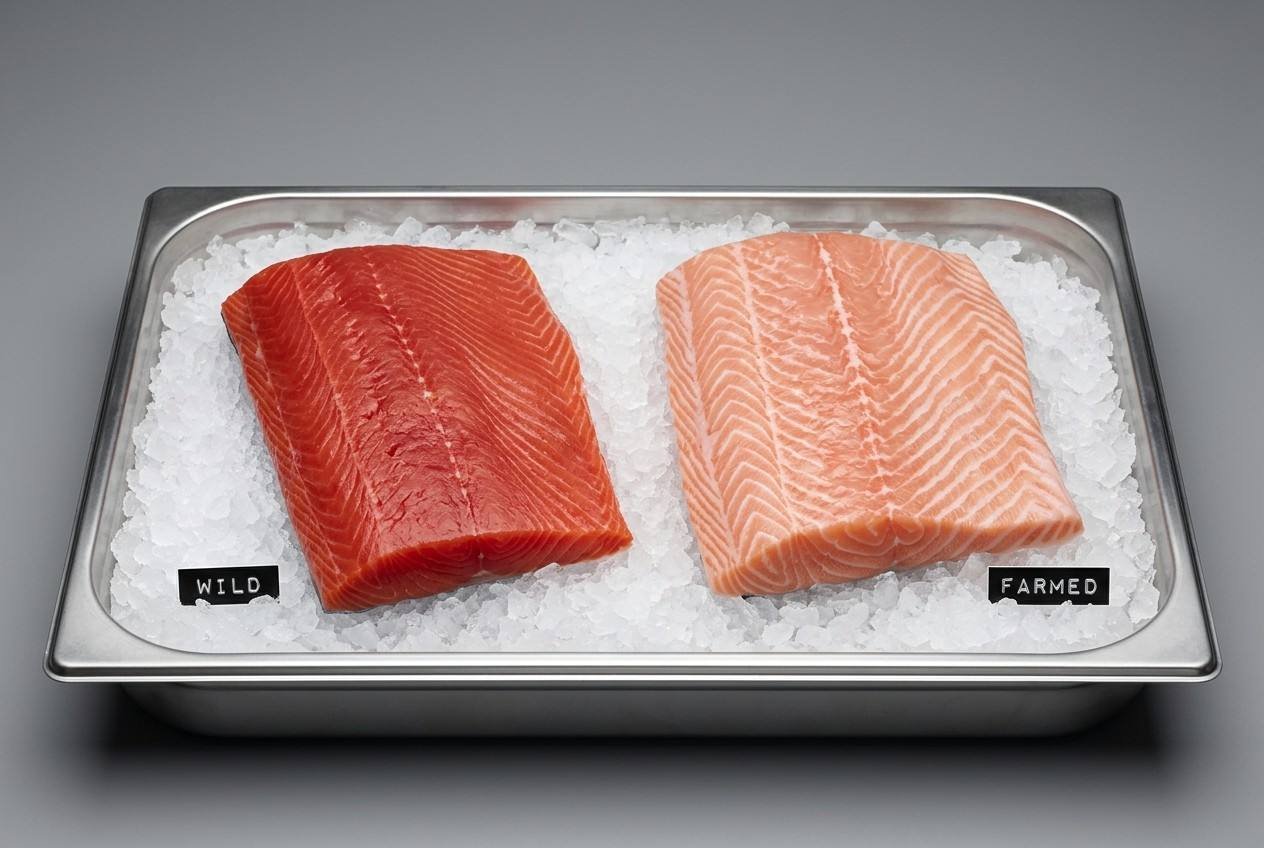
| Type (per 100 g) | Protein | Notes |
|---|---|---|
| Cooked farmed Atlantic | ≈ 22 g | Higher fat, milder flavor |
| Cooked wild Atlantic | ≈ 25 g | Leaner, firmer texture |
| Canned pink (with bones) | ≈ 20 g | Bones add calcium; check sodium |
| Smoked (lox style) | ≈ 18 g | Higher sodium |
| Salmon sashimi (raw) | ≈ 20 g | About 6 g per typical 30 g slice |
Values vary by brand and species, so the nutrition label always beats a general estimate. For sushi lovers, protein in salmon nigiri comes to about 6 to 8 g per piece, and a typical salmon roll offers roughly 10 to 12 g.

Is Salmon a Good Source of Protein?
Yes. Salmon is a complete protein, meaning it supplies all nine essential amino acids the body cannot make on its own. It is also highly digestible, and the amino acid leucine supports muscle repair after exercise.
Compared with other popular proteins per 100 g cooked, salmon (22 to 25 g) sits just below chicken breast (about 31 g) and above most eggs, tofu and beans on a gram-for-gram basis. Its edge is the fat profile: salmon brings omega-3s that chicken breast lacks.
How Much Salmon Is Enough?
The Recommended Dietary Allowance for protein is 0.8 g per kilogram of body weight, or about 56 g a day for a 70 kg adult. One 6 oz salmon fillet provides over 60 percent of that figure.
Weekly Fish Guidance
The Dietary Guidelines for Americans suggest eating about 8 ounces of seafood per week, and the FDA lists salmon among the “best choices” for lower-mercury fish. Many adults can eat 2 to 3 servings a week.
Special Groups
Pregnant or breastfeeding women, and young children, should follow FDA fish-serving guidance and cook salmon fully. Anyone with a medical condition should confirm portions with a doctor or registered dietitian.
Practical Tips to Get the Most Protein from Salmon
- Do not overcook. Cook to 145°F (63°C). Protein stays stable, but dry salmon is harder to enjoy and finish.
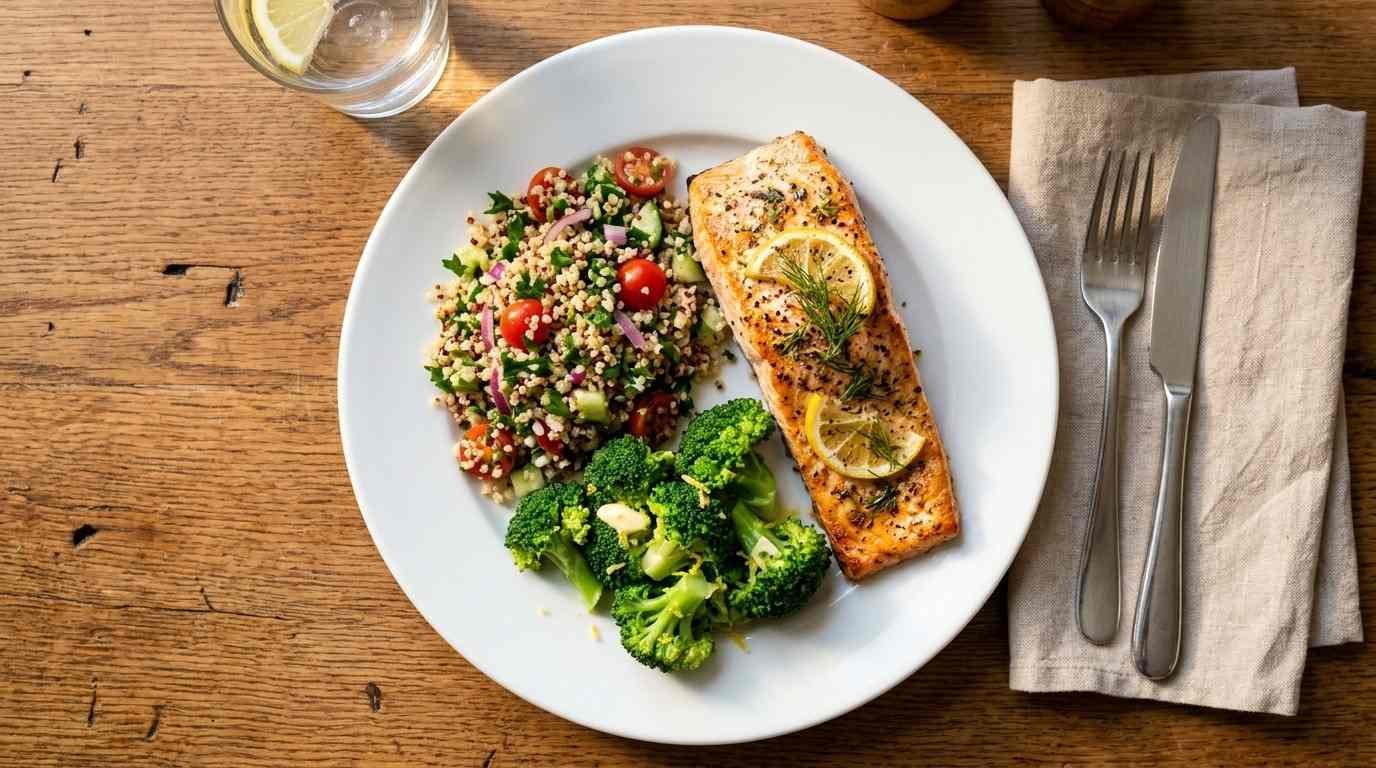
- Pair smartly. Add quinoa, lentils or Greek yogurt sauce for a 40 g+ protein plate.
- Use canned salmon. It is budget-friendly: mix into patties, salads or wraps. A canned salmon patty offers around 15 to 20 g of protein.
- Batch-cook. Bake 4 fillets at once; refrigerate up to 3 days.
- Keep the skin. Crispy skin adds a little extra protein and healthy fat.
Example: A 40 g Protein Dinner
One 5 oz baked wild salmon fillet (≈ 36 g protein), with a half-cup of steamed broccoli (≈ 2 g) and a half-cup of quinoa (≈ 4 g), reaches about 42 g of protein for under 550 calories.
Is Salmon Kosher and Halal?
Readers following dietary laws often ask this. Salmon is a finned, scaled fish, so it is generally accepted as kosher and permissible in halal diets, subject to clean preparation and no non-compliant ingredients. For deeper background, see what is kosher food, is kosher food halal and is all kosher food halal. Curious about the reverse? Read is halal food kosher, is kosher food healthier or is vegetarian food halal. Browse more at Halal Food Near Me.
Salmon Protein FAQ
How many grams of protein are in a 6 oz salmon fillet?
A 6 oz cooked fillet contains about 37 g (farmed) to 43 g (wild) of protein.
Is salmon a complete protein?
Yes. Salmon contains all nine essential amino acids in useful amounts.
Does salmon have carbs?
No. Plain salmon has 0 g of carbohydrate. Carbs come only from sauces, breading or rice.
Is wild or farmed salmon higher in protein?
Wild salmon has slightly more protein per 100 g (about 25 g vs. 22 g) and less fat, while farmed salmon has more calories and omega-3s per serving.
Does cooking change the protein in salmon?
Cooking does not destroy protein, but it removes water. That is why cooked salmon shows more protein per ounce than raw.
Conclusion: The Salmon Protein Bottom Line
So, how much protein in salmon? About 22 to 25 g per 100 g cooked, or roughly 25 g in a 4 oz fillet, 37 g in 6 oz and 50 g in 8 oz. It has no carbs, supplies all essential amino acids and adds omega-3s, vitamin D and B12.
For best results, weigh portions after cooking, choose wild salmon for a leaner option, and pair it with fiber-rich sides. Two to three servings a week is a simple, delicious way to hit protein goals.
Sources & Further Reading
USDA FoodData Central ·
FDA: Advice About Eating Fish ·
Dietary Guidelines for Americans ·
NIH: Omega-3 Fact Sheet
This article is for general information and is not medical advice.