What Food Is Halal? The Complete Guide to Halal Foods
Which foods are permitted in Islam, which are not, and how to tell the difference at the grocery store or the drive-through.
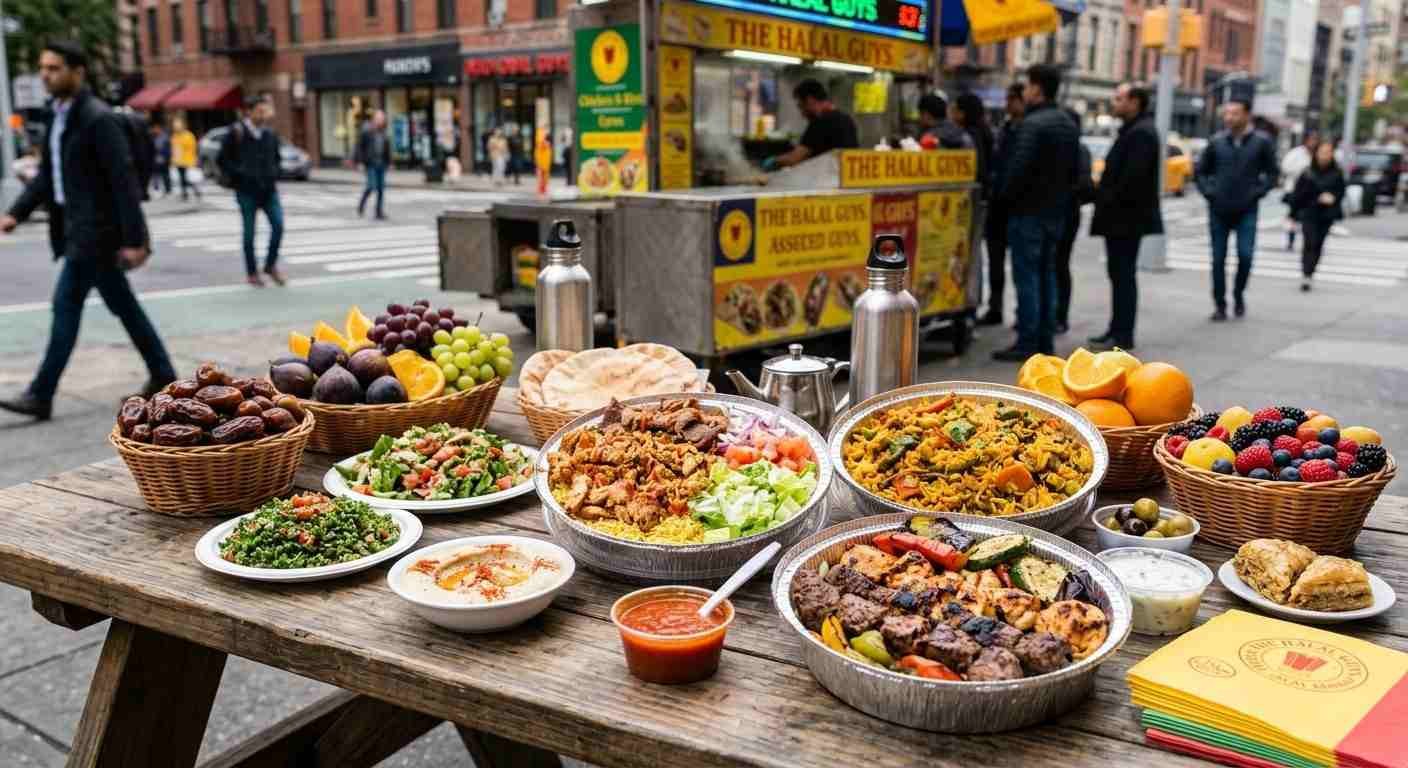
What Does Halal Mean in Islam?
“Halal” is an Arabic word meaning “permissible” or “lawful.” Muslims believe the rules come from the Quran and the teachings of the Prophet Muhammad (the Sunnah). Halal covers more than diet, but food is where most people meet the term first.
The scale is large. According to Pew Research Center, there were roughly 1.9 billion Muslims worldwide in 2020, close to a quarter of the global population. That is why halal options now appear in supermarkets, hospitals, schools and restaurant chains far beyond Muslim-majority countries.
Halal vs. Haram vs. Mushbooh
| Term | Meaning | Example |
|---|---|---|
| Halal | Permitted | Fresh vegetables, halal-slaughtered chicken, fish |
| Haram | Forbidden | Pork, wine, blood |
| Mushbooh | Doubtful or unclear | Gelatin of unknown source, some emulsifiers |
Many Muslims avoid mushbooh items until the source is confirmed. That habit explains why label reading matters so much.
What Food Is Halal? A Category-by-Category Guide
Most foods start out halal. The list of forbidden items is short, so the practical question is usually about processing, ingredients and meat sourcing.
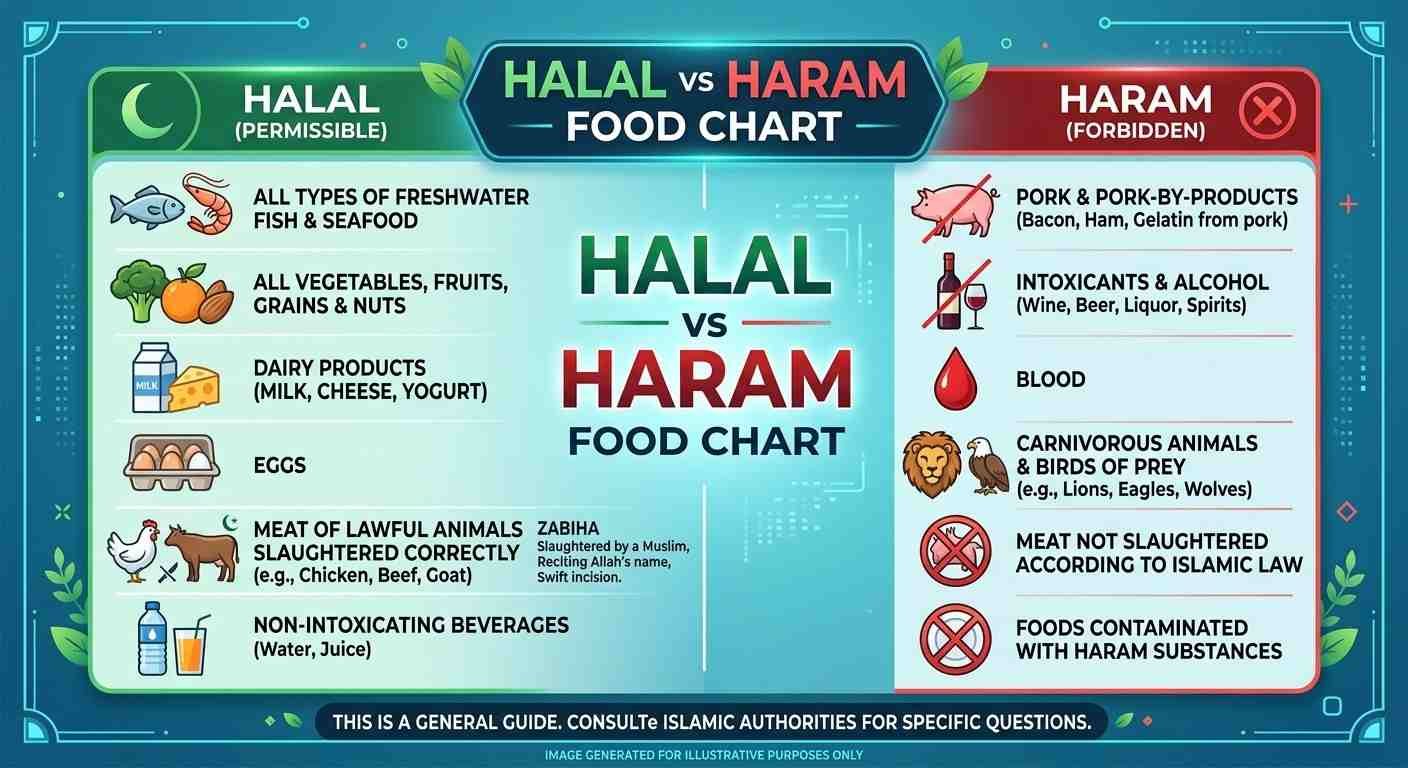
| Food group | Status | What to know |
|---|---|---|
| Fruits and vegetables | Halal | Fresh, frozen and dried are fine. Check sauces and coatings. |
| Grains, bread, rice, pasta | Halal | Watch for animal fats, alcohol-based flavorings or non-halal enrichments. |
| Legumes, nuts, seeds | Halal | Naturally halal. Cross-contact matters only in shared kitchens. |
| Milk, yogurt, butter | Halal | Milk from halal animals is permitted. |
| Cheese | Check | Some cheeses use animal rennet. Microbial or plant rennet is the safer choice. |
| Eggs | Halal | Eggs from permitted birds are halal. |
| Fish and seafood | Halal* | *Most scholars permit all fish. Views on shellfish such as shrimp and crab differ by school of thought. |
| Beef, lamb, goat, chicken, turkey | Halal if zabiha | The animal must be permitted and slaughtered by halal rules. |
| Pork and pork products | Haram | Includes bacon, ham, lard and pork gelatin. |
Halal Meat and Poultry
Permitted animals include cattle, sheep, goats, camels and most poultry. The animal must be healthy at slaughter and processed following halal requirements, covered below. Meat that is simply “not pork” is not automatically halal.
Halal Seafood
Fish are widely accepted without special slaughter. Hanafi scholars traditionally limit seafood to fish, while Shafi’i, Maliki and Hanbali scholars are generally more permissive. Anyone unsure about shrimp, crab or squid usually follows the guidance of a local scholar or community.
Halal Dairy, Eggs and Plant Foods
These are the easy wins. A simple bowl of lentils, a plain omelet or fruit salad is halal without any certification. Problems come from add-ons such as gelatin in yogurt, wine vinegar in dressings or vanilla extract made with alcohol.
What Food Is Not Halal (Haram)?
The Quran names the main prohibitions in verses such as Al-Baqarah 2:173 and Al-Ma’idah 5:3 and 5:90. In everyday terms, the forbidden list looks like this:
- Pork and all pork derivatives, including lard, bacon and pork-based gelatin.
- Blood and blood products, such as blood sausage.
- Carrion, meaning animals that died on their own.
- Alcohol and intoxicants, including wine, beer and food cooked with them.
- Improperly slaughtered animals, including those not slaughtered with God’s name invoked.
- Carnivorous animals and birds of prey, such as lions, dogs, eagles and owls.
Hidden Ingredients That Can Make Food Non-Halal
Two products that look identical on a shelf can differ in status. These are the ingredients that trip up shoppers most often.
| Ingredient | Possible source | Status |
|---|---|---|
| Gelatin (E441) | Pork, beef or fish | Check source |
| Animal rennet | Calf stomach, sometimes non-halal slaughter | Check source |
| Mono- and diglycerides (E471) | Plant or animal fat | Check source |
| L-cysteine (E920) | Feathers, hair or synthetic | Check source |
| Carmine (E120) | Crushed insects | Scholars differ |
| Vanilla extract | Alcohol base | Check alcohol |
| Lard, tallow | Pork fat or beef fat | Lard haram |
How Halal Meat Is Prepared (Dhabihah)
Halal slaughter, called dhabihah or zabiha, follows specific steps. Scholars and certifiers vary in details, but the widely cited core requirements are:
- The slaughterer is a Muslim (some scholars also accept People of the Book) and invokes the name of God, usually “Bismillah, Allahu Akbar.”
- The animal is alive and healthy at the time of slaughter.
- A sharp knife makes a swift cut across the throat, severing the windpipe, esophagus and main blood vessels.
- The blood is fully drained.
- The animal is treated with care and is not slaughtered in view of other animals.
Stunning is a debated topic. Some certifiers allow reversible stunning that does not kill the animal, while others reject stunning altogether. This is one reason two “halal” labels may follow different standards.
What Does “Halal Certified” Mean?
Halal certification means an independent organization has reviewed ingredients, suppliers, slaughter methods and facility practices against a halal standard. A certifier typically audits the plant, checks that equipment is cleaned properly and grants a logo the brand can display.
Points that make a certificate trustworthy
- The certifier is named on the package or the restaurant’s display.
- The certificate is current and covers the specific product or location.
- The certifier is recognized by the local Muslim community or national halal authority.
Certification standards differ across countries, so a logo from one certifier may not satisfy every shopper. Checking the certifier’s website is a two-minute step that removes most doubt.
What Food Is Halal at Popular Restaurants and Chains?
Restaurant halal status depends on the country, the franchise owner and the supplier. The details below are general guidance, and each restaurant should be verified.
What Food Is Halal in McDonald’s?
McDonald’s does not run a single global halal policy. In many Muslim-majority countries, such as Saudi Arabia, the UAE, Malaysia, Pakistan, Egypt and Indonesia, the menu is prepared with halal-certified meat. In the United States and much of Europe, the standard menu is not halal certified, and only a limited number of restaurants in some countries offer halal-certified items.
In the U.S., even meat-free items raise questions. The fries list a natural beef flavor, and shared grills and fryers create cross-contact concerns. Many Muslims in these markets choose salads, a fish sandwich or a nearby halal restaurant instead. Always check the current McDonald’s website for the specific country.
Questions to ask at any location
- Is the meat halal certified, and by whom?
- Are halal and non-halal items cooked on the same grill or fryer?
- Do sauces or desserts contain gelatin or alcohol?
What Food Is Halal at The Halal Guys?
The Halal Guys began as a New York City street cart in 1990 and grew into an international chain famous for chicken or gyro over rice with white sauce and red sauce. The company states that its meat is halal, which makes the menu a straightforward option for many Muslim diners. Franchise locations can vary, so a quick confirmation on the official site or with the manager is still sensible.
| Restaurant type | Halal likelihood | Best move |
|---|---|---|
| Halal-only restaurants (e.g., The Halal Guys) | High | Confirm the local certificate. |
| Fast-food chains in Muslim-majority countries | Often | Look for the halal logo on display. |
| Fast-food chains in the U.S. and Europe | Varies | Ask about meat source and shared equipment. |
| Restaurants serving alcohol | Varies | Check sauces and cooking wine. |
How to Check If Food Is Halal
- Look for a halal logo from a known certifier.
- Read the ingredient list for gelatin, lard, alcohol, rennet and unnamed “animal fat.”
- Search the E-numbers in the table above.
- Ask the restaurant where the meat comes from.
- Use the seafood or vegetarian option when in doubt, while keeping cross-contact in mind.
- Consult a local scholar for disputed items.
Feeding Muslim Guests, Patients and Coworkers
Nurses, teachers and event hosts often ask what food is halal when a Muslim person is in their care. A few habits go a long way:
- Ask the person directly. Practices vary between individuals and traditions.
- Offer clearly halal options such as vegetarian meals without alcohol, or certified halal meat.
- Keep utensils and serving spoons separate for pork or alcohol dishes.
- Label dishes with ingredients so guests can decide for themselves.
- Remember that many Muslims fast from dawn to sunset during Ramadan, so meal timing matters.
A simple question like “Do you eat this?” is welcomed far more than a guess.
Frequently Asked Questions About Halal Food
What food is halal in Islam?
Halal foods include fruits, vegetables, grains, dairy, eggs, fish and meat from permitted animals slaughtered by Islamic rules. Pork, blood, alcohol and carrion are forbidden.
Is chicken automatically halal?
No. Chicken is a permitted animal, but it must be slaughtered according to halal requirements. Regular supermarket chicken is not automatically halal.
Is seafood halal?
Fish are halal according to most scholars. Views on shellfish differ among the schools of Islamic law, so Muslims often follow their own tradition or local scholar.
What does halal certified mean?
It means an independent body has audited the ingredients, suppliers and processes and confirmed they meet a halal standard.
Is McDonald’s halal?
It depends on the country. Many Muslim-majority markets use halal-certified meat, while the U.S. and most of Europe generally do not certify the standard menu.
Conclusion
So, what food is halal? Most natural foods are: fruits, vegetables, grains, legumes, dairy, eggs and fish. Meat qualifies when the animal is permitted and slaughtered correctly. Pork, blood, alcohol and carrion stay off the table.
The gray areas live in processed foods and restaurants, where gelatin, rennet, flavorings and shared equipment make labels and questions important. A halal certificate from a trusted body, a quick call to the restaurant and a habit of reading ingredients solve most problems. When a case is truly unclear, a local scholar is the right final authority.
Disclaimer: This article is for general education. Halal rulings vary by school of thought and region; consult a qualified scholar for personal religious guidance.
What Food Is Halal? Complete Guide to Halal Foods
What Food Is Halal? The Complete Guide to Halal Foods
Which foods are permitted in Islam, which are not, and how to tell the difference at the grocery store or the drive-through.
What Does Halal Mean in Islam?
“Halal” is an Arabic word meaning “permissible” or “lawful.” Muslims believe the rules come from the Quran and the teachings of the Prophet Muhammad (the Sunnah). Halal covers more than diet, but food is where most people meet the term first.
The scale is large. According to Pew Research Center, there were roughly 1.9 billion Muslims worldwide in 2020, close to a quarter of the global population. That is why halal options now appear in supermarkets, hospitals, schools and restaurant chains far beyond Muslim-majority countries.
Halal vs. Haram vs. Mushbooh
| Term | Meaning | Example |
|---|---|---|
| Halal | Permitted | Fresh vegetables, halal-slaughtered chicken, fish |
| Haram | Forbidden | Pork, wine, blood |
| Mushbooh | Doubtful or unclear | Gelatin of unknown source, some emulsifiers |
Many Muslims avoid mushbooh items until the source is confirmed. That habit explains why label reading matters so much.
What Food Is Halal? A Category-by-Category Guide
Most foods start out halal. The list of forbidden items is short, so the practical question is usually about processing, ingredients and meat sourcing.
| Food group | Status | What to know |
|---|---|---|
| Fruits and vegetables | Halal | Fresh, frozen and dried are fine. Check sauces and coatings. |
| Grains, bread, rice, pasta | Halal | Watch for animal fats, alcohol-based flavorings or non-halal enrichments. |
| Legumes, nuts, seeds | Halal | Naturally halal. Cross-contact matters only in shared kitchens. |
| Milk, yogurt, butter | Halal | Milk from halal animals is permitted. |
| Cheese | Check | Some cheeses use animal rennet. Microbial or plant rennet is the safer choice. |
| Eggs | Halal | Eggs from permitted birds are halal. |
| Fish and seafood | Halal* | *Most scholars permit all fish. Views on shellfish such as shrimp and crab differ by school of thought. |
| Beef, lamb, goat, chicken, turkey | Halal if zabiha | The animal must be permitted and slaughtered by halal rules. |
| Pork and pork products | Haram | Includes bacon, ham, lard and pork gelatin. |
Halal Meat and Poultry
Permitted animals include cattle, sheep, goats, camels and most poultry. The animal must be healthy at slaughter and processed following halal requirements, covered below. Meat that is simply “not pork” is not automatically halal.
Halal Seafood
Fish are widely accepted without special slaughter. Hanafi scholars traditionally limit seafood to fish, while Shafi’i, Maliki and Hanbali scholars are generally more permissive. Anyone unsure about shrimp, crab or squid usually follows the guidance of a local scholar or community.
Halal Dairy, Eggs and Plant Foods
These are the easy wins. A simple bowl of lentils, a plain omelet or fruit salad is halal without any certification. Problems come from add-ons such as gelatin in yogurt, wine vinegar in dressings or vanilla extract made with alcohol.
What Food Is Not Halal (Haram)?
The Quran names the main prohibitions in verses such as Al-Baqarah 2:173 and Al-Ma’idah 5:3 and 5:90. In everyday terms, the forbidden list looks like this:
- Pork and all pork derivatives, including lard, bacon and pork-based gelatin.
- Blood and blood products, such as blood sausage.
- Carrion, meaning animals that died on their own.
- Alcohol and intoxicants, including wine, beer and food cooked with them.
- Improperly slaughtered animals, including those not slaughtered with God’s name invoked.
- Carnivorous animals and birds of prey, such as lions, dogs, eagles and owls.
Hidden Ingredients That Can Make Food Non-Halal
Two products that look identical on a shelf can differ in status. These are the ingredients that trip up shoppers most often.
| Ingredient | Possible source | Status |
|---|---|---|
| Gelatin (E441) | Pork, beef or fish | Check source |
| Animal rennet | Calf stomach, sometimes non-halal slaughter | Check source |
| Mono- and diglycerides (E471) | Plant or animal fat | Check source |
| L-cysteine (E920) | Feathers, hair or synthetic | Check source |
| Carmine (E120) | Crushed insects | Scholars differ |
| Vanilla extract | Alcohol base | Check alcohol |
| Lard, tallow | Pork fat or beef fat | Lard haram |
How Halal Meat Is Prepared (Dhabihah)
Halal slaughter, called dhabihah or zabiha, follows specific steps. Scholars and certifiers vary in details, but the widely cited core requirements are:
- The slaughterer is a Muslim (some scholars also accept People of the Book) and invokes the name of God, usually “Bismillah, Allahu Akbar.”
- The animal is alive and healthy at the time of slaughter.
- A sharp knife makes a swift cut across the throat, severing the windpipe, esophagus and main blood vessels.
- The blood is fully drained.
- The animal is treated with care and is not slaughtered in view of other animals.
Stunning is a debated topic. Some certifiers allow reversible stunning that does not kill the animal, while others reject stunning altogether. This is one reason two “halal” labels may follow different standards.
What Does “Halal Certified” Mean?
Halal certification means an independent organization has reviewed ingredients, suppliers, slaughter methods and facility practices against a halal standard. A certifier typically audits the plant, checks that equipment is cleaned properly and grants a logo the brand can display.
Points that make a certificate trustworthy
- The certifier is named on the package or the restaurant’s display.
- The certificate is current and covers the specific product or location.
- The certifier is recognized by the local Muslim community or national halal authority.
Certification standards differ across countries, so a logo from one certifier may not satisfy every shopper. Checking the certifier’s website is a two-minute step that removes most doubt.
What Food Is Halal at Popular Restaurants and Chains?
Restaurant halal status depends on the country, the franchise owner and the supplier. The details below are general guidance, and each restaurant should be verified.
What Food Is Halal in McDonald’s?
McDonald’s does not run a single global halal policy. In many Muslim-majority countries, such as Saudi Arabia, the UAE, Malaysia, Pakistan, Egypt and Indonesia, the menu is prepared with halal-certified meat. In the United States and much of Europe, the standard menu is not halal certified, and only a limited number of restaurants in some countries offer halal-certified items.
In the U.S., even meat-free items raise questions. The fries list a natural beef flavor, and shared grills and fryers create cross-contact concerns. Many Muslims in these markets choose salads, a fish sandwich or a nearby halal restaurant instead. Always check the current McDonald’s website for the specific country.
Questions to ask at any location
- Is the meat halal certified, and by whom?
- Are halal and non-halal items cooked on the same grill or fryer?
- Do sauces or desserts contain gelatin or alcohol?
What Food Is Halal at The Halal Guys?
The Halal Guys began as a New York City street cart in 1990 and grew into an international chain famous for chicken or gyro over rice with white sauce and red sauce. The company states that its meat is halal, which makes the menu a straightforward option for many Muslim diners. Franchise locations can vary, so a quick confirmation on the official site or with the manager is still sensible.
| Restaurant type | Halal likelihood | Best move |
|---|---|---|
| Halal-only restaurants (e.g., The Halal Guys) | High | Confirm the local certificate. |
| Fast-food chains in Muslim-majority countries | Often | Look for the halal logo on display. |
| Fast-food chains in the U.S. and Europe | Varies | Ask about meat source and shared equipment. |
| Restaurants serving alcohol | Varies | Check sauces and cooking wine. |
How to Check If Food Is Halal
- Look for a halal logo from a known certifier.
- Read the ingredient list for gelatin, lard, alcohol, rennet and unnamed “animal fat.”
- Search the E-numbers in the table above.
- Ask the restaurant where the meat comes from.
- Use the seafood or vegetarian option when in doubt, while keeping cross-contact in mind.
- Consult a local scholar for disputed items.
Feeding Muslim Guests, Patients and Coworkers
Nurses, teachers and event hosts often ask what food is halal when a Muslim person is in their care. A few habits go a long way:
- Ask the person directly. Practices vary between individuals and traditions.
- Offer clearly halal options such as vegetarian meals without alcohol, or certified halal meat.
- Keep utensils and serving spoons separate for pork or alcohol dishes.
- Label dishes with ingredients so guests can decide for themselves.
- Remember that many Muslims fast from dawn to sunset during Ramadan, so meal timing matters.
A simple question like “Do you eat this?” is welcomed far more than a guess.
Frequently Asked Questions About Halal Food
What food is halal in Islam?
Halal foods include fruits, vegetables, grains, dairy, eggs, fish and meat from permitted animals slaughtered by Islamic rules. Pork, blood, alcohol and carrion are forbidden.
Is chicken automatically halal?
No. Chicken is a permitted animal, but it must be slaughtered according to halal requirements. Regular supermarket chicken is not automatically halal.
Is seafood halal?
Fish are halal according to most scholars. Views on shellfish differ among the schools of Islamic law, so Muslims often follow their own tradition or local scholar.
What does halal certified mean?
It means an independent body has audited the ingredients, suppliers and processes and confirmed they meet a halal standard.
Is McDonald’s halal?
It depends on the country. Many Muslim-majority markets use halal-certified meat, while the U.S. and most of Europe generally do not certify the standard menu.
Conclusion
So, what food is halal? Most natural foods are: fruits, vegetables, grains, legumes, dairy, eggs and fish. Meat qualifies when the animal is permitted and slaughtered correctly. Pork, blood, alcohol and carrion stay off the table.
The gray areas live in processed foods and restaurants, where gelatin, rennet, flavorings and shared equipment make labels and questions important. A halal certificate from a trusted body, a quick call to the restaurant and a habit of reading ingredients solve most problems. When a case is truly unclear, a local scholar is the right final authority.
Disclaimer: This article is for general education. Halal rulings vary by school of thought and region; consult a qualified scholar for personal religious guidance.