Halal Mexican Food: What to Order, What to Avoid, and How to Find It
Tacos, birria and burritos can all be halal, but only when the meat, the fat and the grill check out. This guide shows how to tell.
What Is Halal Mexican Food?
“Halal” is an Arabic word meaning permissible. In food, it describes what Muslims may eat under Islamic dietary law. Halal Mexican food applies those rules to Mexican cooking, so the flavors stay familiar while the ingredients change where needed.
The halal rules that matter most at a taqueria
- No pork in any form, including bacon, ham, chorizo made from pork, and pork lard.
- No alcohol as an ingredient, which affects some marinades, sauces and desserts.
- Halal-slaughtered meat, meaning the animal was raised and slaughtered according to Islamic guidelines.
- No cross-contamination with non-halal meat on shared grills, fryers and utensils.
Why Mexican cuisine adapts so well
Much of the menu is already built on corn, beans, rice, peppers, avocado, lime and slow-cooked beef or chicken. Goat birria and lamb barbacoa are also long-standing Mexican traditions, so halal cooks are not reinventing the cuisine. They are leaning on parts of it that were always there.
That search figure shows real demand. Diners are looking for local answers, and many restaurants have not yet explained their halal practices clearly online.
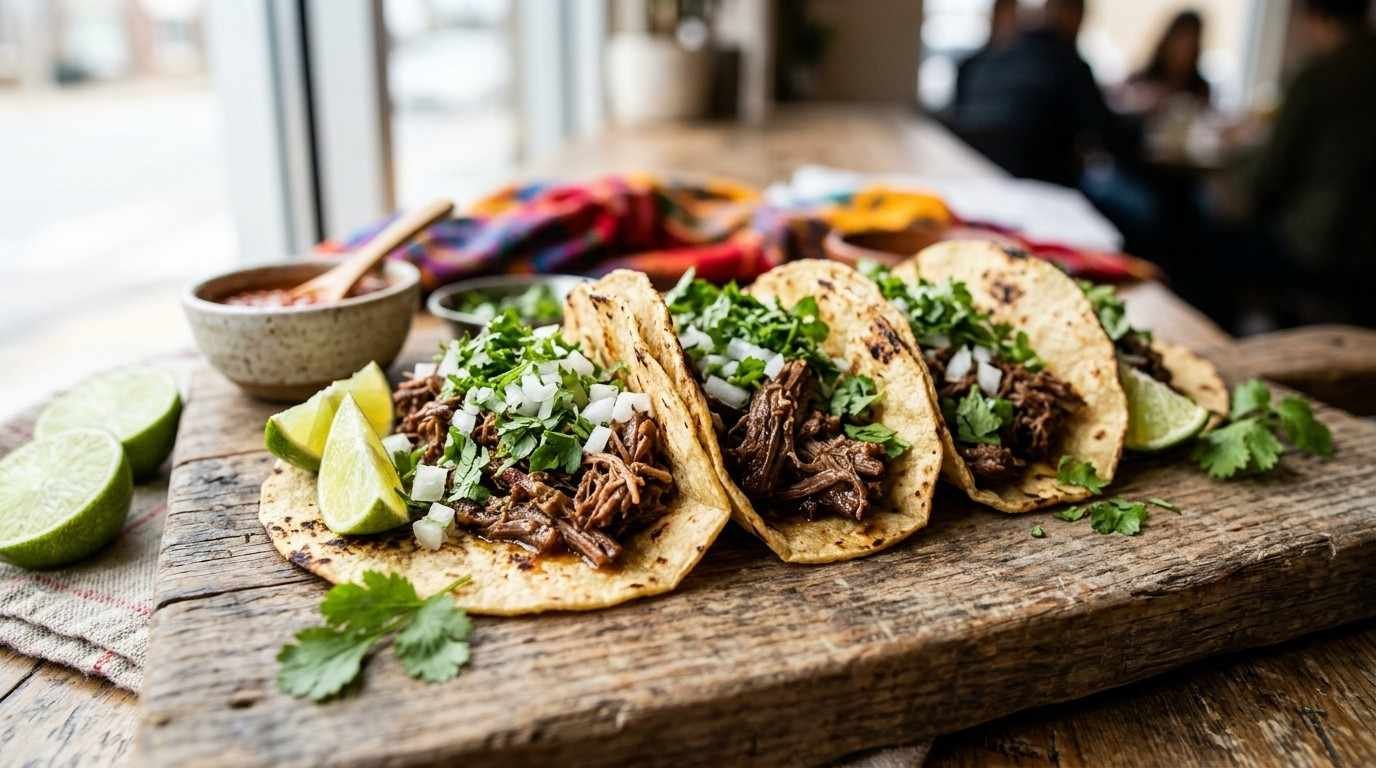
Mexican Dishes That Are Usually Halal-Friendly
Use this table as a starting point, not a guarantee. “Usually” still means the kitchen should confirm.
| Dish | Halal status | What to confirm |
|---|---|---|
| Chicken tacos or fajitas | Often fine | Is the chicken halal-certified? Is the grill shared with pork? |
| Beef barbacoa or carne asada | Often fine | Halal beef source; marinade free of beer |
| Goat or beef birria | Often fine | Halal meat; no pork in the broth |
| Shrimp or fish tacos | Usually fine | Shared fryer oil and sauces |
| Refried beans | Ask first | Traditionally cooked in lard |
| Mexican rice | Ask first | Chicken stock is fine only if halal; some cooks use lard |
| Tamales | Ask first | Masa is often made with lard |
| Flour tortillas | Ask first | Some are made with lard or shortening |
| Al pastor, carnitas, pork chorizo | Not halal | Traditionally pork; see halal swaps below |
| Cheese quesadilla, veggie burrito | Usually fine | Cheese rennet (animal vs. microbial) for strict diners |
Hidden Non-Halal Ingredients to Watch For
The obvious pork dishes are easy to skip. The tricky part is what is mixed into dishes that look harmless.
Pork lard (manteca)
Lard gives beans, tamales and some tortillas their traditional richness. It is the most common hidden issue in Mexican kitchens. Many restaurants now use vegetable oil, but the only way to know is to ask.
Alcohol in sauces and drinks
Beer can appear in batters and braises, and tequila or wine in some sauces and desserts. Alcohol-free sodas, horchata, jamaica (hibiscus tea) and agua fresca are safe drink choices.
Gelatin and other additives
Flan and some gelatin desserts may use gelatin from pork. Packaged sauces and seasoning mixes occasionally include animal-derived ingredients, so labels matter.
The shared grill problem
A halal chicken taco cooked on the same flat-top as carnitas is a problem for many Muslim diners. Ask whether halal meats have a separate grill, clean surface or dedicated utensils.
Halal Swaps for Classic Pork Dishes
Halal kitchens keep the flavor profile and change the protein. Here is how the best versions work:
- Halal al pastor: chicken or beef marinated in the same achiote, pineapple and chile blend, then roasted on a spit.
- Beef or lamb carnitas: braised until tender, then crisped, often in beef tallow or oil.
- Beef chorizo: the same paprika and chile spices, without pork. It works well in tacos, eggs and queso fundido.
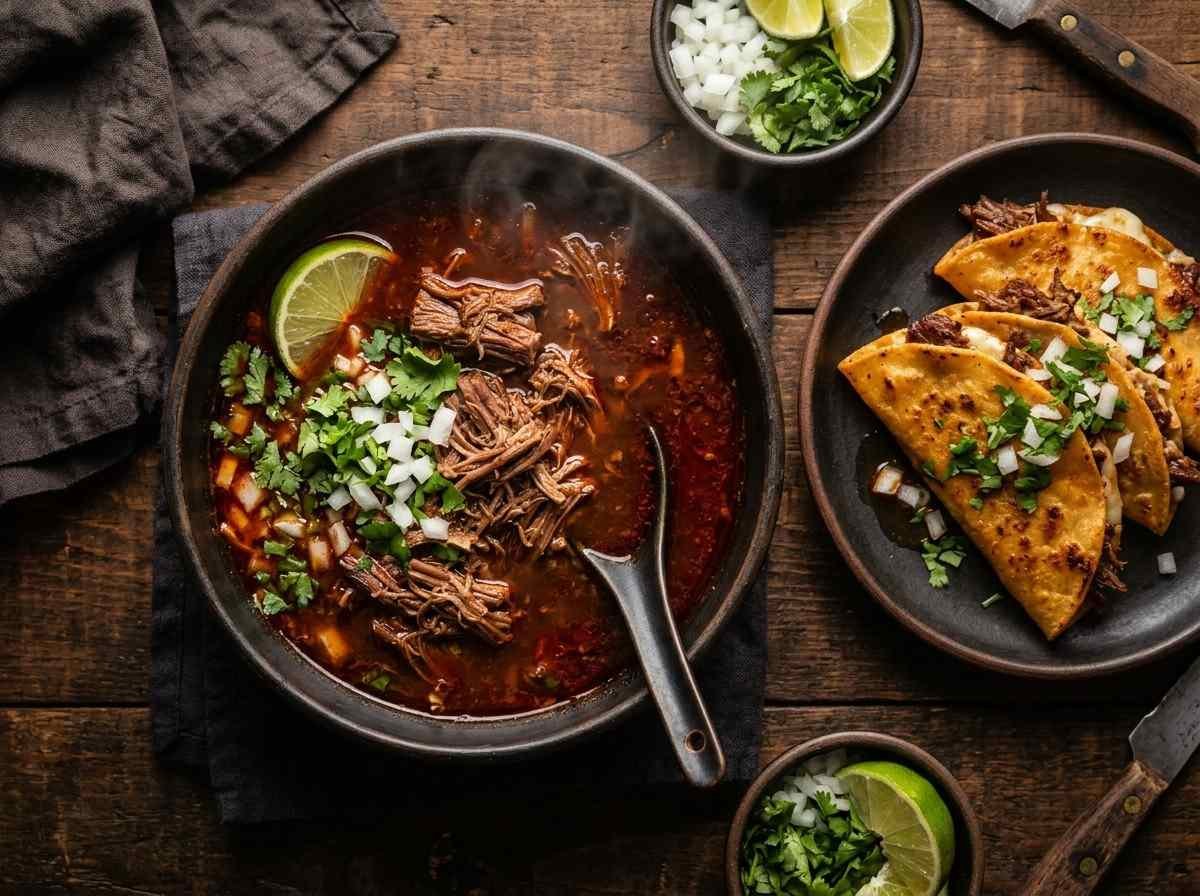
- Birria de res or chivo: a chile-rich stew of beef or goat, served in tacos with consommé for dipping.
How to Find Halal Mexican Food Near You
Local searches such as halal Mexican food in Houston, San Diego, New York or Dearborn show where interest is strongest. Smaller cities often have fewer options, so a few steps help.
A simple 5-step search method
- Check a halal directory such as Zabihah and filter by your city.
- Search Google Maps for “halal tacos” or “halal Mexican,” then read the most recent reviews.
- Look in local Facebook groups and Reddit threads for city-specific recommendations.
- Open the restaurant’s website or social page for a halal statement.
- Call to confirm the meat supplier and the grill setup before you go.
Food trucks and fusion kitchens
Food trucks are often the best source of halal Mexican food, because owners control the whole menu. Halal taco trucks and fusion menus, such as Mexican-Middle Eastern or Mexican-Indian, are also growing in many cities.
Don’t assume chains are halal
Large Mexican chains rarely certify their meat as halal and typically cook several meats together. Always check the brand’s current ingredient information, and ask in store.
Questions to Ask Before You Order
- Is the chicken, beef, lamb or goat halal? Who is the supplier?
- Are the beans, rice and tortillas made with lard?
- Is pork cooked on the same grill, fryer or surface?
- Do any marinades or sauces contain beer, tequila or wine?
- Is there a halal certificate or a statement from the owner?
Most owners are glad to answer. A restaurant that responds clearly and confidently is usually the safer bet.

Making Halal Mexican Food at Home
Cooking at home gives full control. A few habits make it simple:
- Buy halal meat from a local halal butcher or a trusted certified supplier.
- Use oil instead of lard for beans, rice and tortillas.
- Check seasoning packets and canned goods for animal-derived ingredients.
- Swap beer for broth or fresh citrus juice in marinades.
- Build a pantry of dried chiles (guajillo, ancho), cumin, oregano, achiote and corn tortillas.
Easy beginner meals
Chicken fajitas, beef barbacoa in a slow cooker, bean and cheese burritos and shrimp tacos are all forgiving recipes. They also reheat well, which makes them useful for family dinners and meal prep.
Vegetarian and Seafood Options
Diners who prefer to avoid any doubt about meat can build a full meal without it. Black bean tacos, mushroom quesadillas, grilled corn (elote), guacamole and cheese enchiladas all work. Just confirm the beans and rice are lard-free, and that the fryer is not shared with pork.
Common Mistakes Diners Make
- Assuming that “chicken” means “halal chicken.”
- Forgetting that beans, rice and tortillas can contain lard.
- Ignoring shared cooking surfaces.
- Relying on old reviews. Menus, suppliers and ownership change.
- Treating one halal item on a menu as proof the whole kitchen is halal.
Diners’ standards vary, and some are comfortable with seafood or vegetarian dishes even in non-halal kitchens. Personal practice is a good question for a trusted imam or scholar.
Halal Mexican Food FAQ
Is Mexican food halal?
Not automatically. Many dishes are built on chicken, beef, beans and corn, but pork, lard, alcohol and shared grills are common. It is halal only when the meat is halal and no pork or alcohol is used.
Are tacos halal?
Yes, when filled with halal-certified chicken, beef, lamb or goat, or with vegetarian fillings, and prepared without pork, lard or alcohol. Al pastor and carnitas are traditionally pork.
Are refried beans halal?
Only if made with oil or vegetable fat. Traditional refried beans often use pork lard, so ask before ordering.
Is Chipotle halal?
Large chains generally do not serve halal-certified meat, and pork carnitas share the line with other meats. Check the brand’s current ingredient information and ask in store.
How do I find halal Mexican food near me?
Use a halal directory such as Zabihah, filter map listings for halal, read recent reviews, then call to confirm the meat source and whether pork touches the same grill.
Conclusion
Halal Mexican food is very doable. Chicken, beef, lamb, goat, seafood and vegetarian dishes already fill a large part of the cuisine, and halal versions of al pastor, carnitas and chorizo are growing.
The key is asking the right questions: Is the meat halal? Is there lard? Is there alcohol? Is the grill shared? With those four checks, diners can enjoy tacos, birria and burritos with confidence.
Next step: pick one halal spot near you, call ahead with the checklist above, and share what you find with your community.