Halal Korean Food: The Complete Guide to Eating Korean With Confidence
Korean cuisine is loved worldwide, but pork broth, rice wine and shared grills make it tricky for Muslim diners. This guide shows what is safe, what to avoid and where to eat.
A Muslim traveler lands in Seoul, hungry and excited. The streets smell of grilled meat and sesame oil. Then comes the hard part: almost every stall sells pork, and the menu is written in a language that is hard to read.
This is the everyday reality for many Muslims who love Korean culture. The good news is that the halal Korean food scene has grown steadily, thanks to K-drama fans, international students and Korea’s push to welcome Muslim visitors. Searches such as “halal Korean food near me” show strong demand in the US, Malaysia, Singapore and beyond, while competition for these terms stays low.
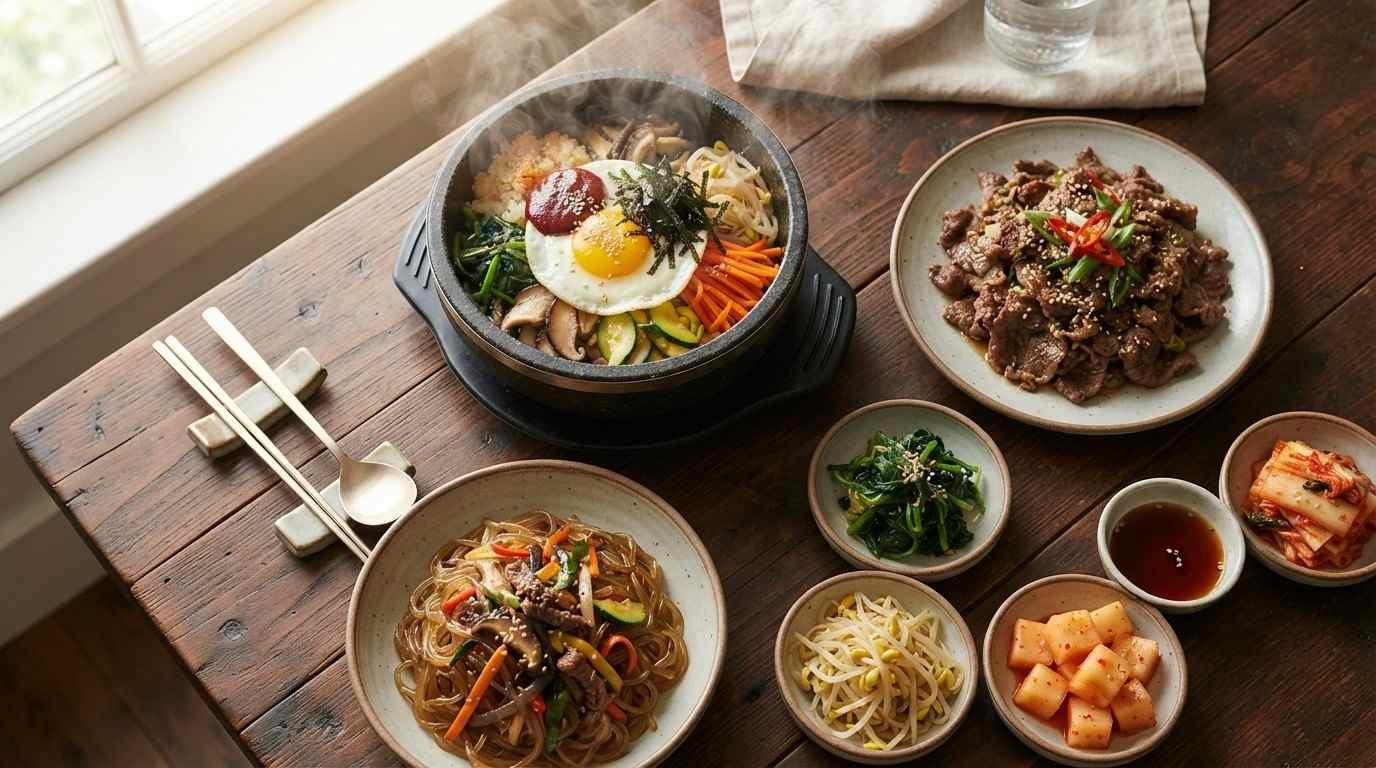
What Is Halal Korean Food?
“Halal” means permissible under Islamic law. For food, that means no pork, no alcohol, no blood, and meat from animals slaughtered according to Islamic rules. Halal Korean food applies those rules to traditional recipes.
Why Korean cuisine is hard to navigate
Korean cooking is built on fermentation, long-simmered broths and shared tables. That creates several challenges:
- Pork is everywhere. Samgyeopsal (pork belly), pork bone soups and pork dumplings dominate menus.
- Alcohol hides in sauces. Rice wine, mirin and soju often go into marinades.
- Shared grills. Even a beef order may be cooked where pork was grilled minutes earlier.
- Language gaps. Ingredient labels are often only in Korean.
Halal certification levels in Korea
Korea has no single halal label, so Muslim visitors benefit from knowing the common categories used by tourism bodies and certifiers such as the Korea Muslim Federation (KMF).
| Category | What it usually means | Confidence |
|---|---|---|
| Halal certified | Audited by a recognized halal authority, with certified meat and ingredients | High |
| Muslim-friendly (self-certified) | Owner states halal practice but has no third-party audit | Medium |
| Pork-free | No pork served, but alcohol or non-halal meat may be used | Low to medium |
| Vegetarian | No meat, but sauces may contain alcohol | Check sauces |
Korean Dishes That Can Be Halal
Many classic dishes work well when made with halal beef, chicken, lamb or seafood. The table shows what to order and what to ask first.
| Dish | What it is | Ask about |
|---|---|---|
| Bibimbap | Rice bowl with vegetables, egg and gochujang | Meat topping, sauce ingredients |
| Bulgogi | Thin marinated beef | Mirin or rice wine in the marinade |
| Galbi | Grilled marinated short ribs | Shared grill, alcohol in marinade |
| Japchae | Glass noodles stir-fried with vegetables | Pork or wine in seasoning |
| Samgyetang | Whole chicken and ginseng soup | Halal chicken, ginseng liquor |
| Dakgalbi | Spicy stir-fried chicken | Sauce alcohol, cheese add-ons |
| Tteokbokki | Chewy rice cakes in spicy sauce | Fish cake, pork-based stock |
| Kimbap | Seaweed rice rolls | Ham, imitation crab gelatin |
| Haemul pajeon | Seafood scallion pancake | Shared frying oil |
Beginner-friendly picks
First-timers usually enjoy bibimbap and bulgogi. Both are mild, filling and easy to adapt. Spice lovers can try dakgalbi or tteokbokki, then add a side of steamed rice to balance the heat.
Banchan: the side dishes
Korean meals arrive with small side dishes called banchan. Most are vegetable-based, such as seasoned spinach, bean sprouts and pickled radish. Kimchi is the one to check, because it often contains salted shrimp or fish sauce. Many Muslims accept seafood, but opinions differ on shrimp, so personal practice matters.
Hidden Non-Halal Ingredients to Watch For
Most mistakes come from ingredients that never appear on the menu.
- Mirin, rice wine and soju: Common in marinades, stews and sauces.
- Pork broth: Used in some ramyeon, dumpling fillings and kimchi stews.
- Instant noodle seasoning: Packets may contain pork extract.
- Gelatin and lard: Found in desserts, snacks and some fried foods.
- Bacon, ham or spam: Added to budae-jjigae, fried rice and kimbap.
- Shared oil and grills: Cross-contact at non-halal kitchens.
Where to Find Halal Korean Food
In Seoul
Itaewon
Itaewon is the best-known area for Muslim visitors. It sits near the Seoul Central Mosque, and many restaurants here cater to halal diners. Search terms like “halal Korean food Itaewon” also pull up places offering Eid menus.
Myeongdong and Dongdaemun
These tourist districts attract many visitors from Southeast Asia and the Middle East, so signs and menus in English or Arabic are easier to find. Look for halal logos on the door and ask for the certificate.
In the United States
Larger cities offer more choice. In New York, Muslim diners often ask on community forums where to find halal food in Koreatown, and answers change as restaurants open and close. Smaller cities, such as Wichita, Kansas, may have Korean restaurants but few halal ones, so calling ahead matters.
- Search “halal Korean restaurant” in a maps app and sort by recent reviews.
- Join local Muslim community groups for fresh recommendations.
- Ask Korean restaurants whether they can prepare chicken or vegetable dishes without alcohol.
In Malaysia, Singapore and Southeast Asia
Halal Korean food is easy to find in Kuala Lumpur, and also appears in Melaka and Ipoh. Singapore has halal Korean delivery options. In these countries, check for the national halal logo, such as JAKIM in Malaysia or MUIS in Singapore.
Halal Korean food at Eid
Many families now celebrate Eid with Korean menus. Restaurants in Seoul’s Itaewon area promote Eid sets, and online reviews often list menu prices and addresses before visiting. Book ahead, since popular places fill quickly.
How to Verify a Halal Korean Restaurant
- Look for a certificate. Ask to see the halal certificate and check the expiry date.
- Ask about the meat supplier. “Where does your beef come from?”
- Ask about alcohol. “Do you use mirin, soju or rice wine in sauces?”
- Ask about the grill. “Is pork cooked on the same surface?”
- Read recent reviews. Muslim diners often mention practices directly.
Simple phrases that help
- “Do you serve pork?” → Dwaeji-gogi isseoyo?
- “No alcohol, please.” → Sul an neoeo juseyo.
- “Is this halal?” → Hallal-ieyo?
Cooking Halal Korean Food at Home
Home cooking gives full control. The pantry is simple once the right swaps are in place.
Easy halal swaps
- Rice wine or mirin: Use apple juice, pear juice or a splash of rice vinegar with sugar.
- Pork stock: Use beef or anchovy and kelp stock.
- Gochujang and doenjang: Read labels for alcohol and additives, then pick trusted brands.
- Soy sauce: Check for halal certification if you follow stricter rules.
Quick halal bulgogi
Slice 500 g halal beef thinly. Mix soy sauce, grated pear, garlic, sesame oil, a little sugar and black pepper. Marinate for at least 30 minutes, then sear in a hot pan for 2 to 3 minutes. Serve with rice and lettuce wraps.
Practical Tips for Eating Halal in Korea
- Plan meals ahead, because halal spots can be far apart.
- Carry snacks as backup, such as halal-labeled instant food or fruit.
- Choose seafood or vegetable dishes when unsure, then confirm the sauce.
- Use Muslim-friendly restaurant guides from the Korea Tourism Organization.
- Check prayer rooms and mosque locations when mapping your day.
Common mistakes
- Assuming vegetarian means halal.
- Trusting a halal sign without asking about meat sources.
- Ordering ramyeon without checking the seasoning packet.
- Forgetting that desserts may contain gelatin.
Frequently Asked Questions
Is Korean food halal?
Not by default. Many dishes use pork, pork broth or rice wine. Korean food is halal only when ingredients are verified or the restaurant is certified.
Is kimchi halal?
Kimchi is mostly vegetables, but it often contains salted shrimp or fish sauce. Check the label or ask the restaurant.
Is Korean BBQ halal?
Only at halal restaurants. Standard grills are shared with pork, and marinades can contain alcohol. Choose halal beef, lamb or chicken venues.
Where can I find halal Korean food near me?
Search “halal Korean restaurant” on a maps app, check certification and recent reviews, then call to confirm. In Seoul, start with Itaewon and Myeongdong.
What can replace soju or cooking wine in halal Korean cooking?
Apple juice, pear juice, grape juice or rice vinegar with a little sugar work well in marinades and sauces.
Conclusion
Halal Korean food is easier to enjoy than ever, but it still takes a little homework. Know the risks: pork, alcohol-based sauces and shared grills. Choose naturally friendly dishes like bibimbap, bulgogi and samgyetang, and confirm the details with the restaurant.
Whether the meal is in Itaewon, Kuala Lumpur, New York or a home kitchen, the same rule applies: ask, verify and eat well. With the checklist above, Korean flavors and halal values fit on the same table.
SEO notes for the editor (remove before publishing)
SEO package
SEO title (52 chars): Halal Korean Food: Where to Eat, What to Order & Tips
Meta description: Discover halal Korean food in Seoul, the US & beyond. Learn safe dishes, hidden non-halal ingredients, certification tips and how to find halal Korean BBQ.
URL: /halal-korean-food-guide/
Keyword analysis: Competitors (Yelp, Tripadvisor, Reddit, Facebook, Instagram, travel listings) serve local, directory-style intent. None offers a full educational guide. Gaps covered here: hidden ingredients, certification levels, verification script, home cooking and Eid. Keyword data shows low difficulty for “halal korean food” and “near me”, with long-tail variants like Itaewon, Myeongdong, Seoul, KL, Melaka, Ipoh, NYC and Singapore delivery.
Internal links: Halal travel in Seoul, Best Korean dishes for beginners, Korean pantry essentials, Halal food in Japan, Eid recipes.
External authority links: Korea Tourism Organization (visitkorea.or.kr) Muslim-friendly guide, Korea Muslim Federation, JAKIM and MUIS halal directories.
Images to add: Halal bibimbap bowl, bulgogi on grill, Itaewon halal sign, Seoul Central Mosque exterior, halal certificate close-up, banchan spread. Use descriptive file names (halal-korean-bbq-seoul.webp) and alt text.
Before publishing: Add 2–3 verified statistics (for example from KTO) and your own first-hand experience or photos to strengthen EEAT. Replace the emoji image slots with real images.