Halal Food Restaurant Guide: How to Find the Best One Near You
Verify authenticity, discover trusted places, and order with confidence, whether at home or travelling abroad.
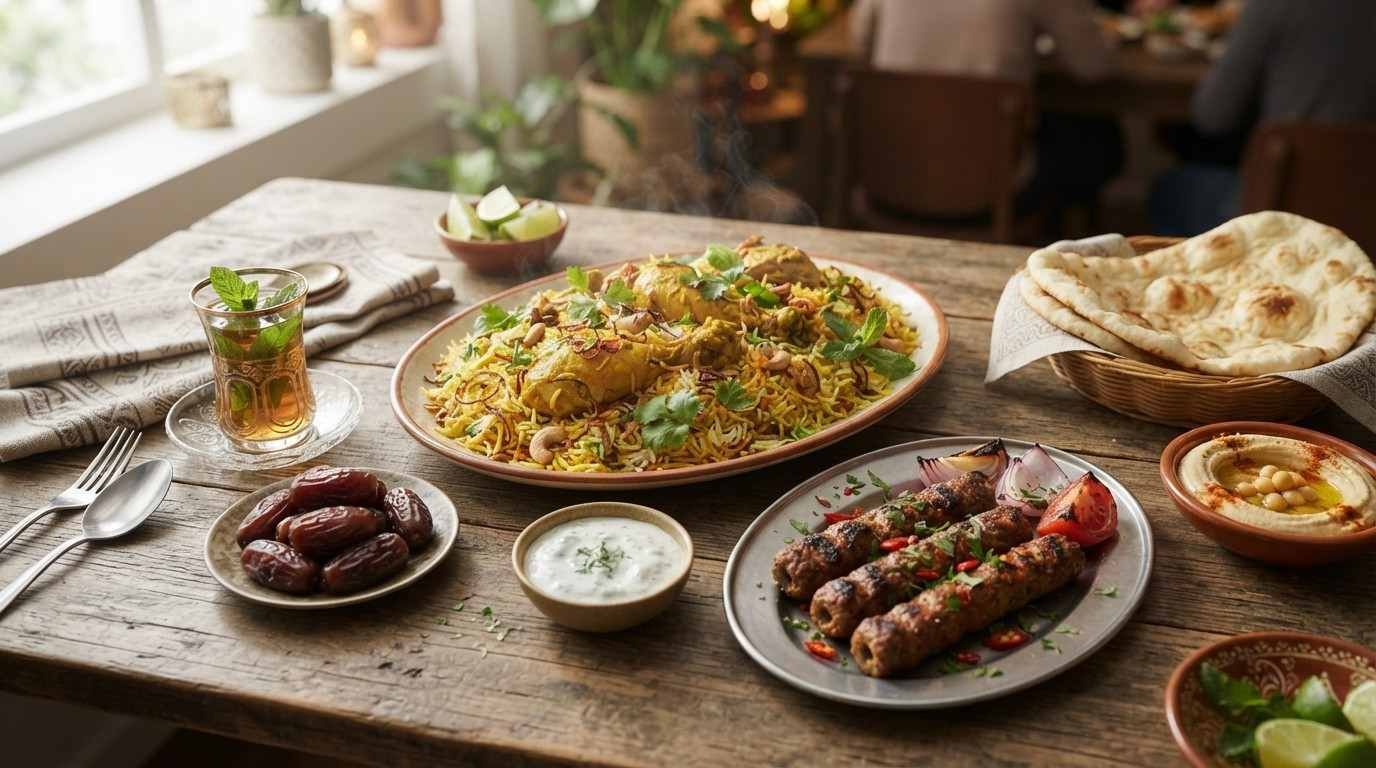
What Does “Halal Food Restaurant” Mean?
“Halal” is an Arabic word meaning “permissible.” A halal food restaurant serves meals prepared according to Islamic dietary law. That covers far more than simply leaving pork off the menu.
The core halal rules
- No pork or pork derivatives, including gelatin or lard from pigs.
- No alcohol as a drink or as a cooking ingredient in many strict kitchens.
- Zabihah slaughter for meat and poultry: a swift cut by a Muslim, with God’s name invoked.
- No cross-contamination from non-halal utensils, grills, or fryers.
Halal vs. “Muslim-owned” vs. “halal-friendly”
| Label | What it usually means | Confidence |
|---|---|---|
| Certified halal | A recognised body audits suppliers and kitchen | High |
| Fully halal (self-declared) | All meat is halal; no certificate shown | Medium–High |
| Muslim-owned | Owner is Muslim; sourcing may vary | Medium |
| Halal-friendly / options | Some dishes halal, shared kitchen | Ask first |
Why Halal Restaurants Are in Such High Demand
Roughly 1.9 billion Muslims live worldwide, according to Pew Research Center estimates, making Islam the second-largest religion. In the United States alone, Pew estimated about 3.45 million Muslims as of 2017, and the number keeps rising.
But halal dining is no longer only a religious choice. Many non-Muslim diners pick halal because they associate it with fresh meat, clear sourcing, and bold flavours. Searches such as “halal food restaurant near me” and “halal food restaurant near me open now” show how often people look for a place to eat right away.
How to Find a Halal Food Restaurant Near You
Step 1: Use map and search tools
Open Google Maps and type “halal restaurant near me.” Sort by rating, then read the newest reviews. Reviews mentioning “zabihah,” “hand-slaughtered,” or “halal certified” are especially useful.
Step 2: Try dedicated halal directories
- Zabihah.com: a long-running, community-rated halal restaurant directory.
- Yelp: filter by the “Halal” category in your city.
- Delivery apps such as Uber Eats and Grubhub have halal categories for takeout.
Step 3: Ask the community
Local Reddit threads, Facebook groups, and mosque noticeboards often reveal hidden gems that rankings miss. A thread like “halal food places in Pittsburgh” can save hours of guesswork.
How to Verify a Restaurant Is Truly Halal
A sign in the window is not proof. Here is a simple checklist used by experienced halal diners.
- Look for certification. Bodies such as HFA, HMA, or IFANCA are common in North America. Check the certificate date.
- Ask about the meat source. “Who is your supplier?” is a polite, normal question.
- Ask about the kitchen. Are grills, fryers and knives shared with non-halal items?
- Check the drinks and sauces. Some sauces contain wine, mirin, or gelatin.
- Read recent reviews. Ownership changes can quietly change standards.
Halal levels in practice
- Zabihah-only: hand-slaughtered meat only.
- Machine-slaughtered halal: accepted by many scholars, rejected by others.
- Mixed menu: halal meat alongside alcohol or pork. Many diners avoid these.
Popular Halal Cuisines to Try
Middle Eastern and Mediterranean
Think shawarma, falafel, hummus, kebabs, and mansaf. Lebanese, Turkish and Syrian restaurants are often entirely halal.
South Asian
Biryani, nihari, karahi, and seekh kebab are staples at Pakistani, Indian, and Bangladeshi halal restaurants. Many are family-run and very affordable.
Street food: the halal cart
In New York City, the famous halal cart serves chicken and rice with white sauce and hot sauce. It shows how halal street food has become mainstream, and it is why “halal food restaurant NYC” is such a frequent search.
Asian halal
Chinese Muslim cuisine, such as hand-pulled lamb noodles from the Lanzhou tradition, and halal Korean, Thai and Malaysian food are growing fast in big cities.
East African and others
Somali, Ethiopian, and Moroccan restaurants regularly use halal meat and offer rich spiced stews and flatbreads.
Finding Halal Food When Travelling
Halal availability varies hugely by country. Singapore, Malaysia, Turkey and the Gulf make it easy. Cities like Tokyo, Rome or Moscow have growing but patchier options.
- Save offline maps with halal restaurants starred before you fly.
- Learn key phrases: “halal,” “no pork,” “no alcohol.”
- Check opening hours around Friday prayers and Ramadan.
- Pack a backup: nuts, dates, and snacks for long transit days.
- Choose seafood or vegetarian when you cannot verify the meat.
Common Mistakes When Choosing a Halal Restaurant
- Trusting the word “halal” on a sign without asking a single question.
- Assuming vegetarian dishes are automatically halal (wine, gelatin and shared fryers say otherwise).
- Ignoring old reviews that mention changes of owner.
- Not checking delivery apps, where the “halal” tag is sometimes outdated.
- Forgetting that the kitchen may share oil with non-halal items.
Tips for Restaurant Owners: Build Trust and Rank Locally
If you run a halal food restaurant, trust is your biggest asset. A few simple steps help customers and search engines find you.
- Display your halal certificate and supplier names clearly.
- Claim your Google Business Profile and add “halal” as an attribute.
- Mention neighbourhood terms (for example “halal food near Rockefeller Center”) naturally on your website.
- List menus in text, not only in images, so Google can read them.
- Encourage reviews that mention specific dishes and halal standards.
Frequently Asked Questions
1. What makes a restaurant halal?
A restaurant is halal when its meat is slaughtered according to Islamic law, it avoids pork and alcohol, and it prevents cross-contamination in the kitchen.2. How can I find a halal food restaurant near me?
Search “halal restaurant near me” on Google Maps, check Zabihah or Yelp, then confirm the meat supplier by phone.3. Is halal food healthier than regular food?
Not automatically. Halal is a religious standard about sourcing and preparation, not a nutrition label. Fried and creamy dishes remain heavy whether halal or not.4. Can non-Muslims eat at halal restaurants?
Yes. Halal restaurants welcome everyone, and many diners enjoy them for the flavours and clear ingredient standards.5. What is the difference between halal and zabihah?
Halal is the broad category of permissible food. Zabihah refers specifically to meat from animals slaughtered by hand following Islamic rites, and many diners consider it the strictest standard.Conclusion
Finding a great halal food restaurant is easier than ever, but trust still comes from asking the right questions. Start with a map search, cross-check reviews and directories, and confirm certification, meat sourcing and kitchen practices.
Whether you want a family biryani night, a quick shawarma, or a safe meal abroad, the steps in this guide help you eat with confidence. Bookmark it, share it with friends, and enjoy exploring halal cuisine near you.