Halal Food Nearby: How to Find Real, Trusted Halal Places Fast
A practical guide to finding halal food nearby, checking that it is genuinely halal, and picking a place you will want to return to.
Search a map app, filter by “open now,” read recent reviews, then confirm meat sourcing with a quick call. That four-step routine finds reliable halal food in most cities in under ten minutes.
It is 7:30 p.m., everyone is hungry, and the first three restaurants on the map look promising. But are they halal? Anyone who follows a halal diet knows this moment well. Searching for halal food nearby sounds simple, yet the results can be mixed: some places are fully certified, some serve only a few halal items, and some simply use the word on a sign.
This guide explains how to find halal food nearby quickly, how to confirm what is on the plate, and how to choose with confidence at home or on the road. It is written for Muslim diners, and also for friends, coworkers and curious eaters who want to understand what to look for.
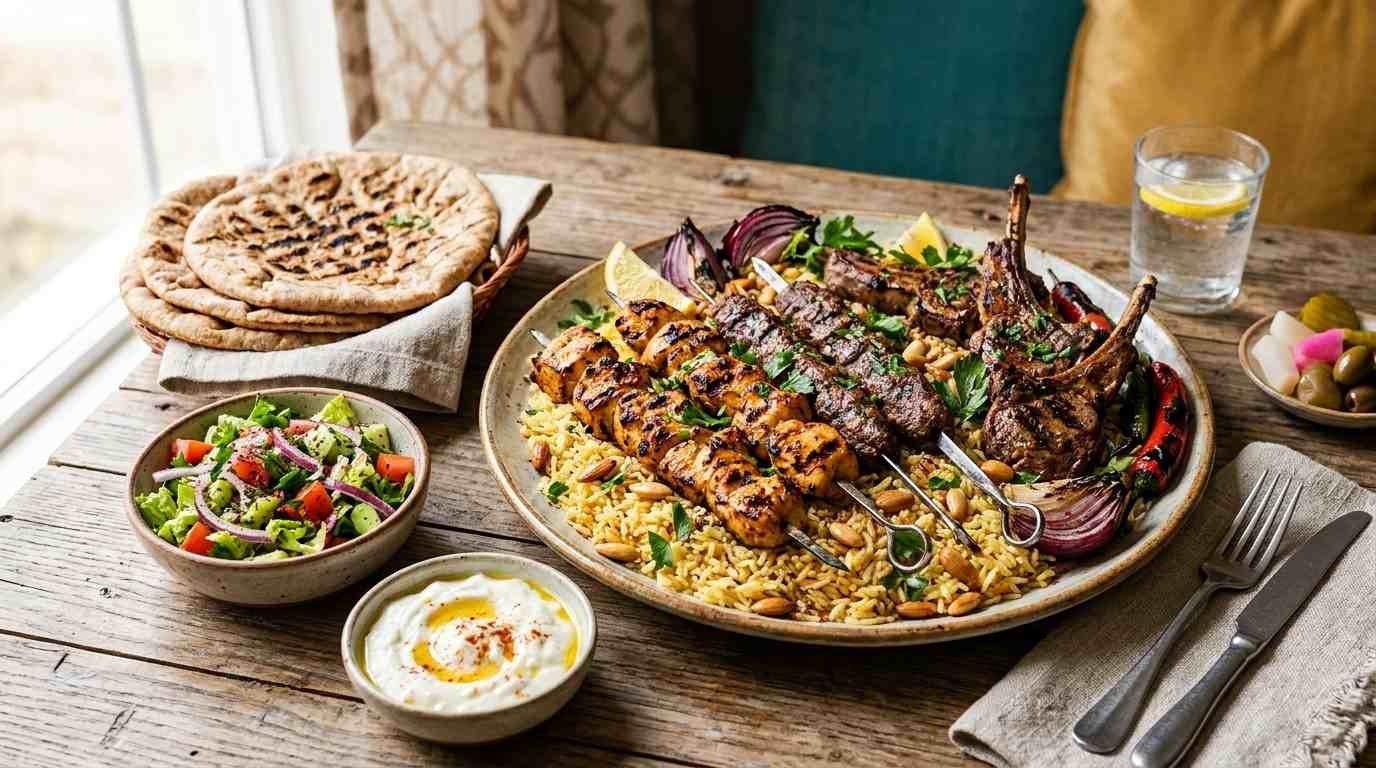
What “Halal Food” Actually Means
Halal is a way of eating that touches ingredients, preparation and handling. Pew Research Center estimates that around 1.9 billion Muslims live worldwide, so demand for halal options now reaches far beyond traditional neighborhoods. Restaurants, food trucks, grocery stores and delivery apps increasingly serve this audience.
The Core Rules in Plain Language
- No pork or pork-derived products, including some gelatin and lard.
- No alcohol as a drink or as an ingredient, such as wine in sauces.
- Permitted animals only, slaughtered with a prayer and a swift cut by a Muslim slaughterer.
- No cross-contact with non-halal items on shared grills, fryers or utensils.
Halal vs. Zabihah
“Zabihah” refers to meat slaughtered by hand following traditional practice. Some diners accept all halal-certified meat, while others look specifically for zabihah. If this matters to you, ask directly.
Halal vs. Kosher
The two systems overlap but are not identical. Kosher does not guarantee halal, and halal does not guarantee kosher.
Seven Ways to Find Halal Food Nearby
No single tool is perfect. The best results usually come from combining two or three of these methods.
1. Use Google Maps With Smart Search Terms
Typing “halal food near me” works, but small tweaks improve results. Try “halal restaurant open now,” “halal lunch near me” or “halal chicken rice.” Then use the filters for rating and opening hours.
2. Try Halal-Specific Directories and Apps
Community-built directories such as Zabihah list halal restaurants and markets by city, often with notes on meat sourcing. Review sites and food-delivery apps also include halal categories, which is handy when you want dinner at home.
3. Check Delivery Platforms
Delivery apps in many cities now include a halal filter or category. Always open the restaurant page to read the description. Some listings are based on one or two menu items rather than the whole kitchen.
4. Ask Local Community Groups
Local Facebook groups, Reddit threads and mosque noticeboards are often the most honest sources. Residents share new openings, closures and recent experiences. Competitor-style “best halal in town” lists from local food writers also work well as a starting point.
5. Follow Mosques and Islamic Centers
Many centers keep informal lists of trusted restaurants, caterers and butchers. These recommendations tend to be careful because the community eats there regularly.
6. Look at Instagram and TikTok
Search location tags and hashtags such as #halalfood plus your city name. Videos show the real menu, portion sizes and atmosphere. Treat them as inspiration, then verify details.
7. Walk Into Halal-Friendly Neighborhoods
Areas near universities, hospitals and large mosques often have clusters of halal restaurants, grocers and food carts. A short walk can turn up options that never rank well online.
| Method | Best for | Watch out for |
|---|---|---|
| Google Maps | Speed, opening hours, directions | Unverified “halal” labels |
| Halal directories | Detailed notes by city | Outdated listings |
| Delivery apps | Eating at home | Partly halal menus |
| Community groups | Honest, current opinions | Personal taste differences |
| Mosque recommendations | Trusted caterers and butchers | Limited restaurant coverage |
| Social media | Discovering new spots | Paid promotions |

How to Verify a Restaurant Is Truly Halal
A sign in the window is a good start, but it is not proof. Halal status can be claimed for different things: halal meat only, a halal menu section, or a fully halal kitchen. Use this checklist before you sit down.
- Ask for the certificate. Recognized certifying bodies issue documents that restaurants usually display.
- Ask about the meat supplier. A confident owner can name the supplier or explain the sourcing.
- Ask about alcohol and pork. Check whether either is served or used in sauces and marinades.
- Check shared equipment. Separate grills and fryers matter if the kitchen also handles non-halal items.
- Read recent reviews. Look for comments from regular Muslim customers within the last few months.
Understanding Halal Labels
| What the sign says | What it may mean | What to ask |
|---|---|---|
| “100% halal” | Entire menu is halal | Is there a certificate? |
| “Halal meat” | Meat is halal, other items may not be | Is alcohol served or used? |
| “Halal options” | Some dishes only | Which dishes, and how are they cooked? |
| “Muslim-owned” | Owner’s background, not certification | Is the meat halal? |

Questions You Can Copy and Paste
- “Is all of your meat halal, including chicken and beef?”
- “Do you cook anything with alcohol or pork products?”
- “Is the halal food prepared on separate equipment?”
Popular Halal Cuisines to Look For
Halal food is not one cuisine. It spans the globe, so the variety is one of the best parts of searching.
Middle Eastern and Mediterranean
Shawarma, falafel, kebabs, hummus and grilled platters are classic choices. These restaurants are often halal by default, and the Mediterranean parking-and-dining spots people search for frequently fall into this category.
South Asian
Biryani, nihari, karahi and tandoori dishes are widely available in halal versions. Many serve generous family portions at fair prices.
Halal Street Food
Chicken-over-rice carts, gyros and food-truck burgers offer fast, filling meals. Look for a posted halal sign and ask about the meat source.
East and Southeast Asian
Halal ramen, Malaysian, Indonesian, Thai and Chinese Muslim (Hui) dishes are growing in many cities. Lamb noodles and hand-pulled dishes are popular finds.
Burgers, Fried Chicken and Pizza
Many chains and independents now offer halal burgers, wings or pizza with halal toppings. Confirm which locations participate, since policies may vary by branch.
Halal Food While Traveling
Finding halal food nearby becomes harder when the city is new. A little preparation makes it easier.
- Research before you land. Save a few map pins near your hotel.
- Check hotel dining. Some hotels list halal menus or can arrange them on request.
- Pack backup snacks. Nuts, dates and halal-certified bars help on long travel days.
- Learn key phrases. “Halal” is widely understood, but “no pork, no alcohol” helps in other languages.
- Choose seafood or vegetarian meals carefully when unsure, and ask about sauces and cooking oil.
Airports and Highways
Airport food courts and rest stops can be limited. Check the airport’s website in advance, or choose vegetarian options and confirm that no alcohol is used in the dish.
Smart Tips for Ordering and Saving Money
Practical Tips From Regular Halal Diners
- Call ahead for large groups, especially at busy times.
- Check prayer-friendly timing if you plan to dine near Friday prayers.
- Save your favorites in a map list so you are never searching from scratch.
- Look for lunch specials, which are often the best value.
- Review responsibly. Mention what you confirmed, such as certificate seen or meat supplier named, to help the next diner.
Cooking Halal at Home
When nothing nearby fits, a halal butcher or supermarket section solves the problem. Look for certification marks on packaging, and read labels for gelatin, alcohol-based flavorings and animal-derived additives.
Frequently Asked Questions About Halal Food Nearby
How do I find halal food nearby?
Search “halal food near me” in a map app, filter by open now and rating, then read recent reviews. Confirm meat sourcing on the restaurant’s website or by phone.
How can I tell if a restaurant is really halal?
Look for a halal certificate from a recognized body, ask about the meat supplier, check whether alcohol and pork are used, and read recent reviews from Muslim diners.
Is halal food the same as kosher food?
No. Both follow religious dietary laws and share some similarities, but the rules, slaughter requirements and certifying authorities differ.
Is halal food only for Muslims?
No. Anyone can enjoy halal food. Many people choose it for flavor, clear sourcing rules or to dine with Muslim friends and family.
Are vegetarian restaurants automatically halal?
Not always. Vegetarian dishes can still contain alcohol, such as wine in sauces or vanilla extract, or gelatin-based additives, so it is worth asking.
Conclusion
Finding halal food nearby does not need to be stressful. Start with a map search, add a trusted directory or community recommendation, and always verify with a certificate, a quick question or recent reviews. Know the difference between “halal options,” “halal meat” and “100% halal,” and the right choice becomes clear.
Save the places you trust, share honest reviews, and explore different cuisines. With these habits, the next time hunger strikes, a reliable halal meal will be only a few taps away.