Halal Food Around Me: How to Find Authentic, Trusted Halal Restaurants Near You
A practical, no-fluff guide to locating halal meals quickly, verifying what is on the plate, and eating well whether at home or on the road.
Quick Answer: How to Find Halal Food Around You
- Search “halal restaurants near me” in Google Maps and filter by open now and rating.
- Cross-check the shortlist on a halal directory such as Zabihah.
- Read recent reviews for words like “zabiha,” “certified,” or “hand-slaughtered.”
- Call or message the restaurant and ask who supplies the meat.
- Save verified spots in a map list so the next search takes seconds.
Few searches are as time-sensitive as “halal food around me.” The person typing it is usually hungry, often in an unfamiliar area, and unwilling to guess about something tied to faith. A wrong guess means wasted time, or worse, a meal that does not meet personal dietary standards.
This guide walks through how halal diners find reliable options, which tools work best, and how to confirm that a restaurant’s claims hold up. It also covers what to order, how to handle late-night and delivery situations, and what changes when traveling.
What Halal Food Really Means
“Halal” is an Arabic word meaning permissible. In food, it describes what is allowed under Islamic dietary law. Pew Research Center estimated the global Muslim population at roughly 1.9 billion in 2020, so halal dining serves a very large and varied community, with different cuisines and different personal standards.
The Core Rules, Simply Explained
- Pork and its by-products are never halal.
- Alcohol is not permitted, including as a cooking ingredient in many interpretations.
- Meat must come from permitted animals that were slaughtered according to Islamic guidelines, with God’s name invoked.
- Blood and carrion are excluded.
- Cross-contact matters: halal food should not be prepared on surfaces shared with non-halal meat, according to many diners.
Halal vs. Zabiha: A Distinction That Matters
These two terms are often mixed up. Zabiha refers to meat from an animal slaughtered by hand, with a prayer, by a Muslim. Many restaurants use “halal” more broadly, and some rely on machine-slaughtered meat that certain scholars accept and others do not.
Neither view is “wrong.” The point is that diners hold different standards, so a good halal search should include asking which standard a restaurant follows.
Halal Is Not Only for Muslims
Plenty of non-Muslim diners seek halal restaurants too. Some like the spice-forward cooking of South Asian, Middle Eastern, and North African kitchens. Others are hosting a Muslim guest and want to choose a place everyone can eat at comfortably.
Why Finding Halal Food Is Harder Than It Looks
Typing the phrase into a map app returns a long list, yet the results are not always reliable. A few common problems explain why.
- Loose labeling. Some businesses add “halal” to a listing because it attracts clicks, even when only some menu items qualify.
- Outdated listings. Restaurants change suppliers, ownership, or hours, and the online profile may lag behind.
- Mixed menus. A restaurant may serve halal chicken but not halal beef, or offer pork on the same menu.
- Different standards. A place that is halal enough for one diner may not be for another.
The fix is a simple two-step habit: discover using apps, then verify with direct questions. The next sections cover both.
7 Ways to Find Halal Food Near You
1. Use Google Maps With Smart Search Phrases
Google Maps is the fastest starting point. Variations pull up different results, so it pays to try several:
- “halal restaurants near me”
- “halal food open now”
- “zabiha halal [city name]”
- “halal [cuisine], e.g. halal Thai near me”
After the results load, filter by Open now and sort by rating. Tap into reviews and search within them for “halal” to see what real customers say.
2. Check a Dedicated Halal Directory
Directories built for the halal community, such as Zabihah, often include details general apps miss: whether the meat is zabiha, whether alcohol is served, and how recently the listing was reviewed by users.
3. Filter on Yelp and Tripadvisor
Both platforms allow searches for halal restaurants in a given city. They help most for comparing menus, photos, and recent reviews. Treat the halal tag as a lead to check, not a guarantee.
4. Try Delivery Apps
Platforms like Uber Eats have halal categories or “near me” pages that group restaurants offering halal dishes. They are handy at night or when staying in. The same rule applies: confirm with the restaurant if the standard matters.
5. Browse Local Food Editors’ Maps
City food publications such as Eater regularly publish curated halal maps. These lists tend to highlight well-established places and standout dishes rather than every option, which makes them useful for choosing a special-occasion meal.
6. Ask Community Groups
Local Facebook groups, university Muslim Student Associations, and neighborhood chat groups are among the most trustworthy sources. Members share which new spots opened, which quietly changed suppliers, and which are worth the drive.
7. Call the Nearest Mosque or Islamic Center
Mosques often know which restaurants and butchers in the area are reliable. Some Islamic centers also keep an informal list of recommended places, especially for halal groceries and catering.
Create a Google Maps list called “Halal – Verified” and add only places that have passed a quick check. Over a few months, it becomes a personal guide that works in any mood or any hurry.
Halal Search Tools Compared
| Tool | Best for | Strength | Limitation |
|---|---|---|---|
| Google Maps | Quick, live results | Hours, directions, recent reviews | Halal tags are not verified |
| Zabihah | Halal-specific detail | Community-focused listings | Some entries may be dated |
| Yelp | Comparing options | Photos and detailed reviews | Halal filter can be loose |
| Tripadvisor | Travelers | Wide city coverage | Fewer details on meat sourcing |
| Delivery apps | Eating at home | Convenience, menu browsing | Requires confirming the standard |
| Community groups | Trusted local tips | Real, current experience | Opinions vary by member |
How to Verify a Halal Restaurant Before Ordering
Verification does not need to be awkward. Most owners of genuine halal restaurants welcome the questions, because they hear them daily.
Five Questions Worth Asking
- “Is all of your meat halal, or only certain items?”
- “Is it zabiha (hand-slaughtered)?”
- “Who is your supplier, and is there a certificate?”
- “Do you serve pork or alcohol?”
- “Is halal meat cooked on separate grills and utensils?”
Signs of a Trustworthy Place
Visible certificate
A current certificate from a recognized halal certifying body, displayed near the entrance or on the website.
Confident answers
Staff who explain sourcing without hesitation or vague replies.
Community reputation
Regular mentions in local groups and long-term repeat customers.
Clear menu
No ambiguous labels and clear marking of any non-halal items.
Be cautious if a restaurant serves pork on the same menu and cannot explain how halal items are kept separate, or if the “halal” sign looks hand-added and the staff cannot name a supplier.
What to Order: Halal Favorites by Cuisine
Halal restaurants cover nearly every major cuisine. Knowing a few signature dishes makes browsing a menu far easier.
South Asian
Biryani, nihari, chicken karahi, seekh kebab, and naan are staples. Many Pakistani and Indian restaurants in North America are fully halal, which makes this a dependable first search.
Middle Eastern and Mediterranean
Shawarma, mixed grills, hummus, falafel, kofta, and fresh pita dominate. A halal guys-style platter of chicken over rice is a common street-food order in many US cities.
North and East African
Think Somali rice with goat, Ethiopian tibs at Muslim-owned spots, and Moroccan tagine with couscous.
Southeast Asian and Chinese
Halal Malaysian, Indonesian, and Hui-style Chinese restaurants serve noodles, satay, rendang, and hand-pulled noodle soups.
American Comfort Food
Halal burgers, fried chicken, wings, and smash-burger spots have grown quickly, appealing to diners who want familiar flavors with confidence in the sourcing.
Finding Halal Food in Common Situations
Halal Food Open Now or Late at Night
Late-night options usually cluster around food trucks, shawarma shops, and 24-hour diners run by halal owners. Search “halal open now” and sort by distance, then check the closing time on the listing and call if it is close.
Halal Delivery
For delivery, use the search bar inside the app and type “halal.” Read the restaurant’s description and recent reviews, and add a note at checkout if a specific preparation matters.
Halal While Traveling
- Download an offline map and save halal spots before leaving.
- Research halal grocery stores for snacks and backup meals.
- Check airports and highways for halal-certified outlets or vegetarian and seafood alternatives.
- Learn the local word for “halal” and for “no pork.”
Family-Friendly Halal Dining
Families usually weigh space, a kids’ menu, prayer-friendly timing, and whether the venue serves alcohol. Reviews mentioning “family,” “high chairs,” or “quiet” are good clues.
Budget Halal Eating
Food trucks, lunch specials, and combo platters generally offer the best value. Halal grocery stores also sell ready-made food at lower prices than most sit-down restaurants.
City Snapshots: Where Halal Dining Is Thriving
Halal dining is strongest where there are large and long-established Muslim communities, but good options now appear in mid-sized cities as well.
- Houston, Texas: known for a wide mix of South Asian, Middle Eastern, and Southern-style halal restaurants.
- Los Angeles, California: food editors regularly map its halal spots across Mediterranean, African, and Southeast Asian kitchens.
- Austin, Texas: local Muslim community resources maintain halal restaurant lists.
- Las Vegas area: searches such as “halal food around me North Las Vegas” show steady local demand.
In smaller towns, the best bet is often a single family-owned restaurant or a halal grocery with a small kitchen. These places tend to be well known by word of mouth, so asking locals is faster than scrolling.
Practical Habits for Eating Halal With Confidence
- Keep a short list of go-to places in each neighborhood visited regularly.
- Re-check a restaurant if a new owner or menu appears.
- Leave honest reviews that mention what was verified, which helps the next diner.
- Support certified suppliers and butchers, since they strengthen the whole local halal market.
- Carry vegetarian or seafood fallback options when halal meat is uncertain.
Frequently Asked Questions
How do I find halal food around me right now?
Search “halal restaurants near me” in Google Maps, filter by open now and rating, then cross-check the shortlist on a halal directory such as Zabihah. A quick phone call confirms the meat source.
What is the difference between halal and zabiha?
Halal means permissible under Islamic law. Zabiha is meat from an animal slaughtered by hand in the prescribed way. Some diners accept any halal-labeled meat; others eat only zabiha.
Is halal food only for Muslims?
No. Anyone can enjoy halal food. Many non-Muslim diners choose it for its flavors, sourcing standards, or to share meals with Muslim friends and family.
Can I trust a halal sign in a restaurant window?
A sign alone is not proof. Ask which meats are halal, who the supplier is, and whether a certifying body is involved. Reputable restaurants answer openly.
Is fast food halal?
It depends on the brand, country, and individual branch. Some outlets serve certified halal items, but most major chains in the US do not, so check with the specific location.
Conclusion
Finding halal food around you comes down to two habits: discover widely, then verify carefully. Google Maps, halal directories, delivery apps, food editors’ maps, and local community groups each add a piece of the picture.
A few direct questions about the meat, the supplier, and the kitchen turn a hopeful guess into a confident meal. Save the places that pass the check, share honest reviews, and the next search for “halal food around me” will take seconds instead of minutes.
SEO Toolkit (not part of the published article)
Keyword Analysis
- Main keyword: halal food around me (Ahrefs: KD Easy, volume >100)
- Search intent: local and transactional, with a need for trust and verification.
- Related terms covered: halal restaurants near me, halal food open now, best halal food, zabiha, halal delivery, halal certification, halal near me by city.
- Competitor pattern: directories (Zabihah, Yelp, Tripadvisor, Uber Eats) offer lists but little guidance; blogs and city guides offer curated picks for one city only.
- Gaps this article fills: how to verify halal, halal vs zabiha explained, comparison of search tools, situational advice (open now, travel, delivery), and multi-city coverage.
SEO Title (58 characters)
Halal Food Around Me: Find Trusted Halal Spots Fast (2026)
Meta Description (156 characters)
Looking for halal food around me? Learn how to find authentic halal restaurants nearby, check certification, avoid red flags, and eat well anywhere in 2026.
SEO-Friendly URL
/halal-food-around-me/
Internal Linking Suggestions
- Best halal restaurants in [your city] (city guide)
- Halal vs kosher: what is the difference?
- Halal grocery shopping guide
- Halal meal prep and recipes
- Eating halal while traveling
External Authority Link Suggestions
- Pew Research Center: global Muslim population data
- Zabihah (halal restaurant directory)
- Islamic Services of America or other recognized halal certifiers
- Eater city halal maps
- Google Maps Help: search and filter places
Image Suggestions
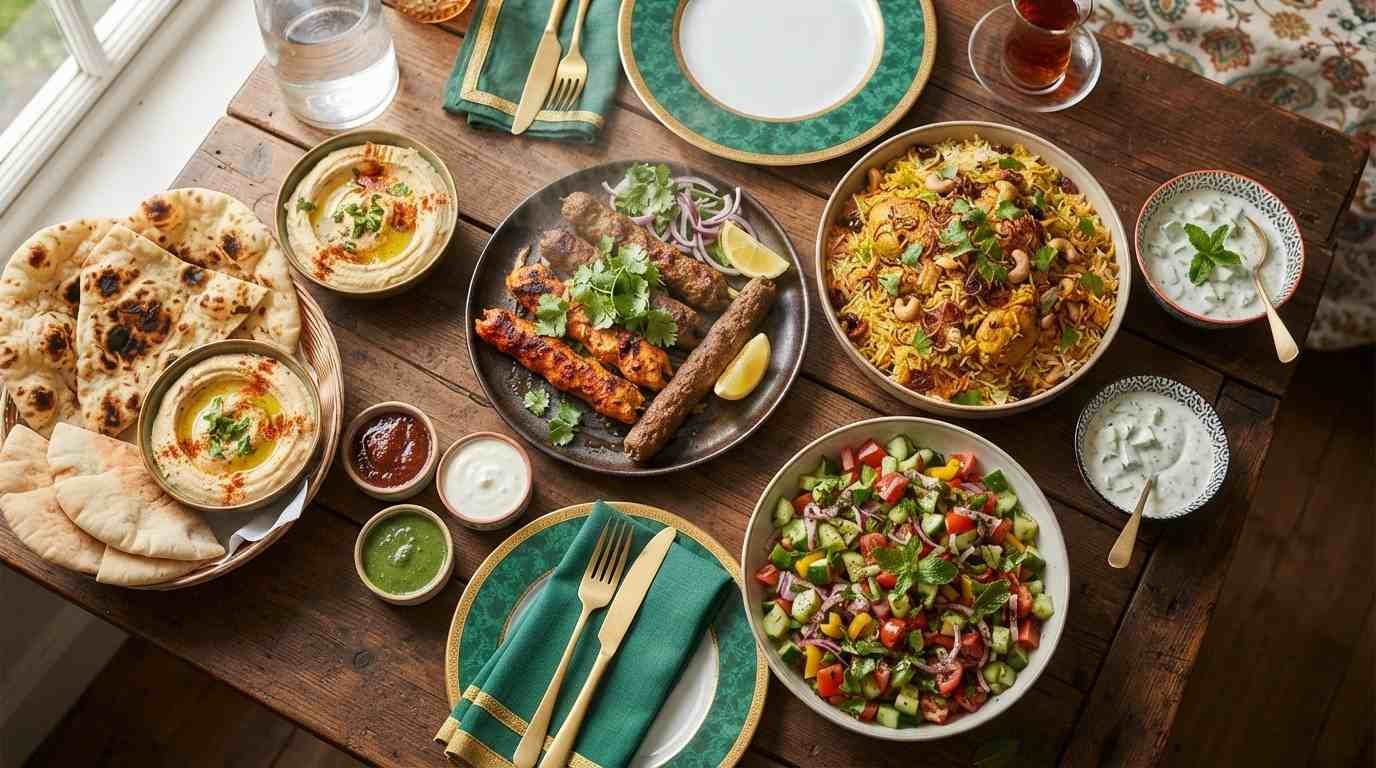
- Halal food spread (alt: “Table of halal dishes including kebabs, rice and flatbread”)
- Biryani plate (alt: “Chicken biryani with raita and naan”)
- Phone showing a map search for halal restaurants (alt: “Searching for halal restaurants near me on a phone map”)
- Halal certificate in a restaurant window (alt: “Halal certification displayed at a restaurant entrance”)
- Infographic: “5 questions to ask a halal restaurant”
Outline Used (H1 to H4)
- H1: Halal Food Around Me
- H2: What halal means (H3: core rules, halal vs zabiha, not only for Muslims)
- H2: Why it is hard (bulleted)
- H2: 7 ways to find halal food (H3 each)
- H2: Tools compared (table)
- H2: How to verify (H3: questions, trust signals)
- H2: What to order by cuisine (H3 per cuisine)
- H2: Situations (H3: open now, delivery, travel, family, budget)
- H2: City snapshots, practical habits, FAQ, conclusion