Chicken Piccata Calories: Homemade, Restaurant & With Pasta
A clear, honest breakdown of calories, macros, and smart swaps, so you can enjoy this lemon-caper classic without guessing.
Chicken piccata is a Italian-American favorite: thin chicken cutlets, lightly floured, pan-seared, then simmered in a bright sauce of lemon, capers, and broth. It tastes rich, but it is built on lean protein. The calorie count depends far more on how it is cooked and served than on the dish itself.
This guide explains where the calories come from, compares homemade and restaurant versions, and shares practical ways to lighten it up.
How Many Calories Are in Chicken Piccata?
Most nutrition databases and recipe sites report a similar range for a standard homemade serving. The exact figure depends on the cutlet size, flour, oil, and butter.

Calories per serving, by portion
- One small cutlet (about 4 oz cooked): roughly 250–320 calories with sauce.
- One standard cutlet (about 6 oz): roughly 350–450 calories.
- Two cutlets: roughly 600–850 calories, a common restaurant portion.
Homemade vs Restaurant vs Packaged: Comparison
Restaurant plates are larger, use more butter, and are usually served over pasta. Figures below are typical ranges, not exact values for any single brand.
| Version | Typical calories | Notes |
|---|---|---|
| Homemade, light (no pasta) | 300–380 | Measured oil and butter |
| Homemade, classic | 380–450 | Standard flour dredge, 2 tbsp butter |
| Homemade with pasta | 550–750 | 1 cup cooked pasta adds ~200 kcal |
| Chain restaurant, with pasta | 800–1,500 | Varies widely by chain and portion |
| Frozen or packaged meal | 250–450 | Smaller portions, check the label |
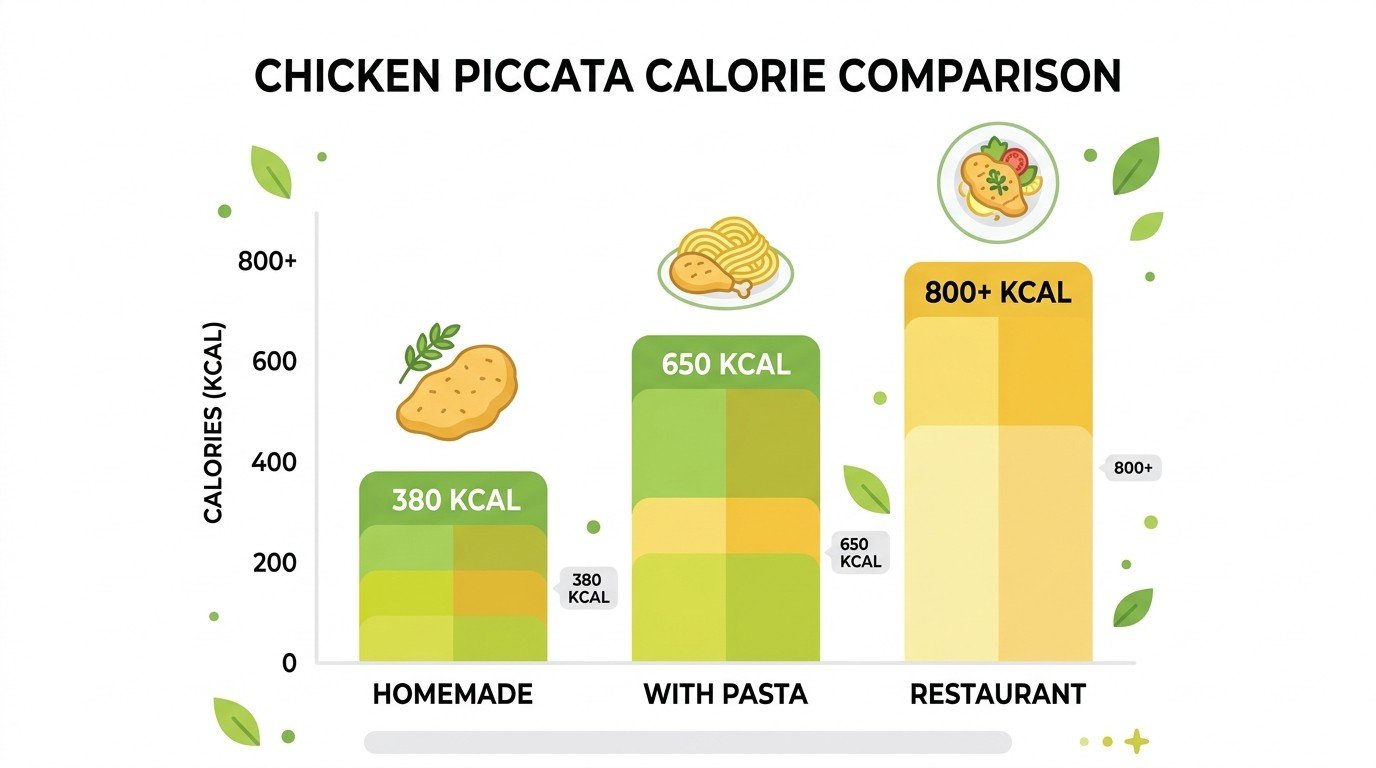
Searches such as Cheesecake Factory, Olive Garden, California Pizza Kitchen, and Cooper’s Hawk chicken piccata calories are common. Because menus and recipes change, check each restaurant’s official nutrition page for the current number.
Chicken piccata vs chicken marsala
The two dishes are close. Marsala uses mushrooms and sweet wine, while piccata uses lemon and capers. Calories are usually within 50–100 of each other when portions match, so the choice comes down to flavor.
Macros and Nutrition Facts
Approximate values for one homemade serving (6 oz cutlet with sauce, no pasta):
| Nutrient | Amount |
|---|---|
| Calories | ~380 |
| Protein | ~35 g |
| Total fat | ~20 g |
| Saturated fat | ~7 g |
| Carbohydrates | ~10 g |
| Sodium | ~700–900 mg (capers and broth) |
Chicken breast supplies lean protein, while capers and canned broth push sodium up. For reference, the USDA Dietary Guidelines suggest keeping sodium under 2,300 mg per day for most adults.
What Drives the Calories Up
1. Butter and olive oil
One tablespoon of butter is about 100 calories. Many recipes use 3–4 tablespoons across the pan and sauce.
2. Flour dredge
A heavy coating can absorb extra oil. A light dusting adds only about 40–60 calories per cutlet.
3. Portion size
Restaurant breasts can weigh 8 oz or more, often served as two pieces.
4. Pasta, rice, or potatoes
Sides frequently double the total. Pasta is the usual pairing, adding 200–400 calories.
5. Cream or extra cheese
Traditional piccata has none, but some restaurant versions add cream or parmesan.
How to Make Chicken Piccata Lighter
- Pound the chicken thin. Even cutlets cook fast and need less oil.
- Use a nonstick pan and measure oil with a teaspoon, not a pour.
- Swap half the butter for broth. Finish with just 1 tablespoon for gloss.
- Dredge lightly. Shake off excess flour, or use a gluten-free flour blend.
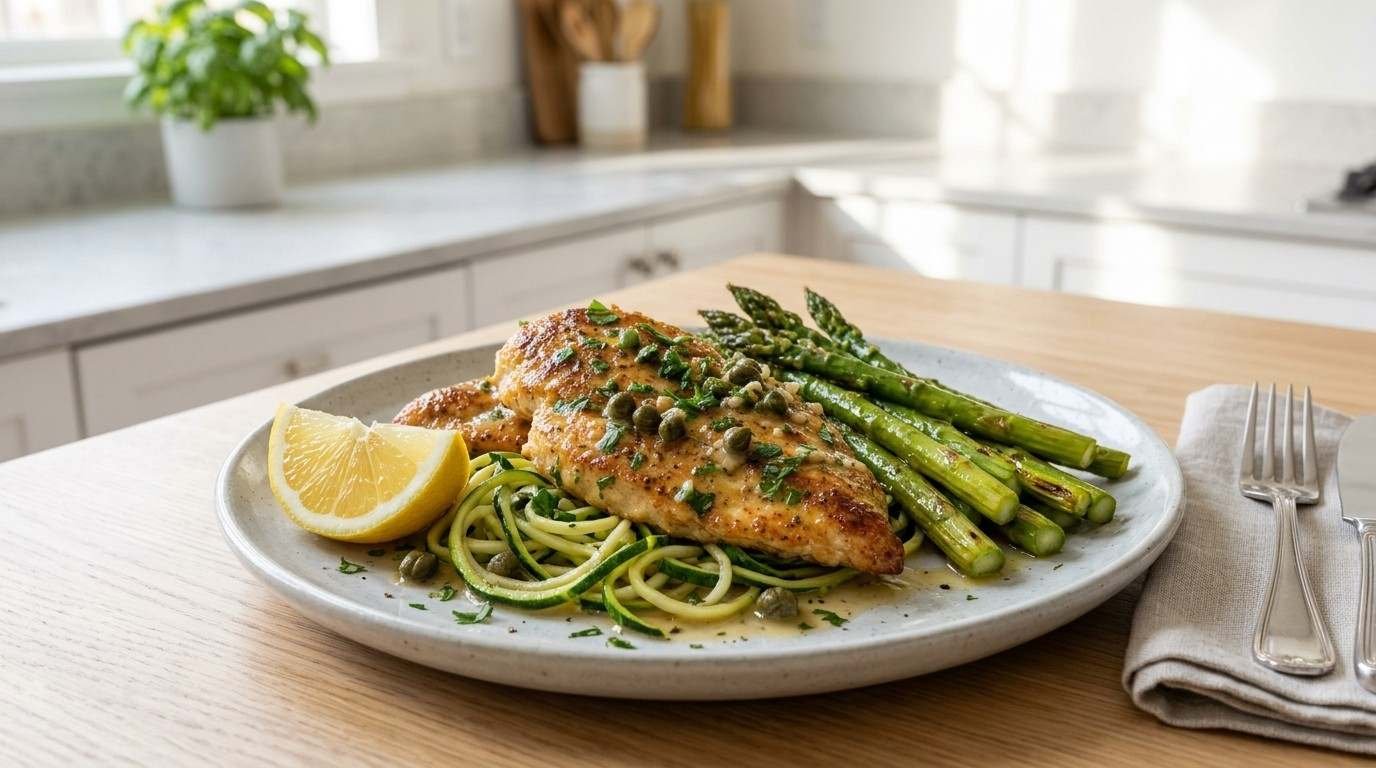
- Serve over vegetables. Zucchini noodles, roasted asparagus, or steamed broccoli keep the plate under 450 calories.
- Choose low-sodium broth and rinse the capers.
Ordering at a restaurant
- Ask for sauce on the side.
- Swap pasta for a vegetable side.
- Share the entrée or box half before you start eating.
Is Chicken Piccata Healthy? Diet Fit
Homemade chicken piccata is a solid option for high-protein eating. It provides lean protein and avoids heavy cream sauces. The main watch-outs are sodium and added fat.
- Weight loss: Fits well at 300–450 calories with vegetables.
- Low carb: About 8–15 g carbs when the flour is light and no pasta is served.
- Gluten-free: Use rice flour or almond flour for dredging.
- Low sodium: Use unsalted broth and limit capers.
Halal and Kosher Considerations
Readers of this site often ask whether a dish fits their dietary rules. Chicken piccata needs a few small changes.
Is chicken piccata halal?
It can be. Use halal-certified chicken, and replace the traditional white wine with chicken broth plus a splash of lemon juice. Learn more about the basics in our guide on whether vegetarian food is halal.
Is chicken piccata kosher?
Traditional recipes finish the chicken sauce with butter, which mixes meat and dairy. Kosher cooks substitute olive oil or pareve margarine. To understand the rules, see what kosher food is and whether kosher food is healthier.
Wondering how the two standards overlap? Read is kosher food halal, is halal food kosher, and is all kosher food halal. You can also browse more guides on our homepage.
Simple Lighter Chicken Piccata Recipe
Makes 4 servings, about 330 calories each (without sides).

- 4 thin chicken cutlets (about 5 oz each), seasoned with salt and pepper
- ¼ cup flour for dredging
- 1 tbsp olive oil and 1 tbsp butter
- ¾ cup low-sodium chicken broth
- 3 tbsp lemon juice and 2 tbsp capers, rinsed
- Fresh parsley to finish
- Dredge the cutlets lightly and shake off excess flour.
- Sear in hot oil 3–4 minutes per side until golden, then set aside.
- Add broth and lemon juice. Simmer 3–4 minutes to reduce slightly.
- Stir in capers and butter, return the chicken, and warm through.
- Top with parsley and serve with vegetables.

Frequently Asked Questions
How many calories are in a serving of chicken piccata?
A homemade serving of one cutlet with sauce is typically 300–450 calories. With pasta, it rises to about 550–750.
Is chicken piccata healthy?
It can be. It is high in protein and moderate in fat when made with lean chicken and measured butter. Watch the sodium from capers and broth.
Is chicken piccata low carb?
Without pasta and with a light dredge, it is fairly low carb at roughly 8–15 g per serving.
Is chicken piccata halal?
Yes, if the chicken is halal and the wine is replaced with broth and lemon juice.
How can I lower the calories in chicken piccata?
Use thin cutlets, less oil and butter, a light flour coating, and vegetables instead of pasta.
Conclusion
Chicken piccata is one of the more balanced Italian-American dishes. A homemade serving usually lands near 380 calories, while pasta and restaurant portions can double or triple that. Control the butter, portion, and side dish, and the meal stays light and satisfying.
Use the ranges above as a guide, check official nutrition pages when dining out, and adjust the recipe to your dietary needs. Lemon, capers, and tender chicken make it easy to eat well without giving up flavor.